GRATTACIELI DI AOSTA: the demolition
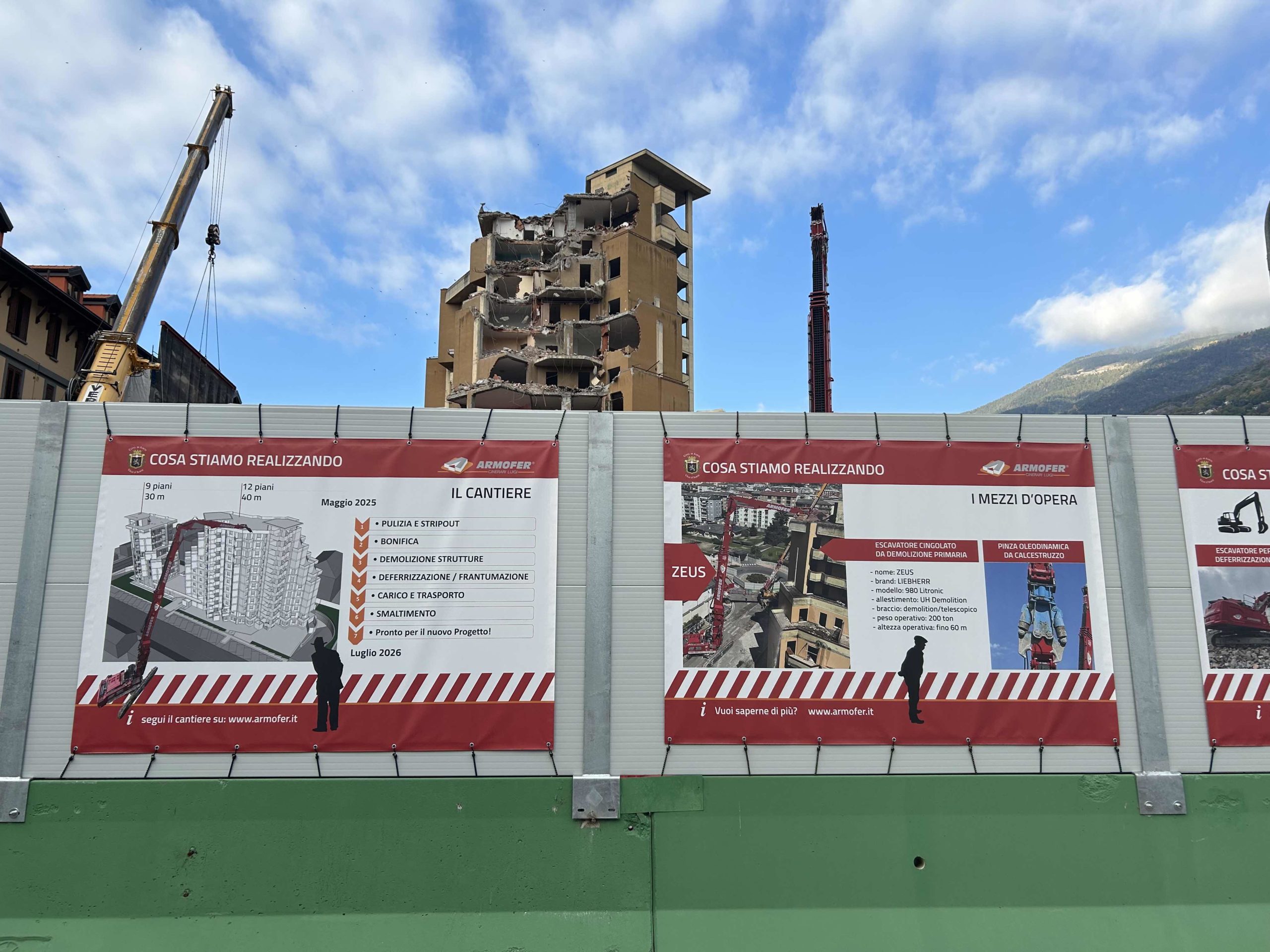
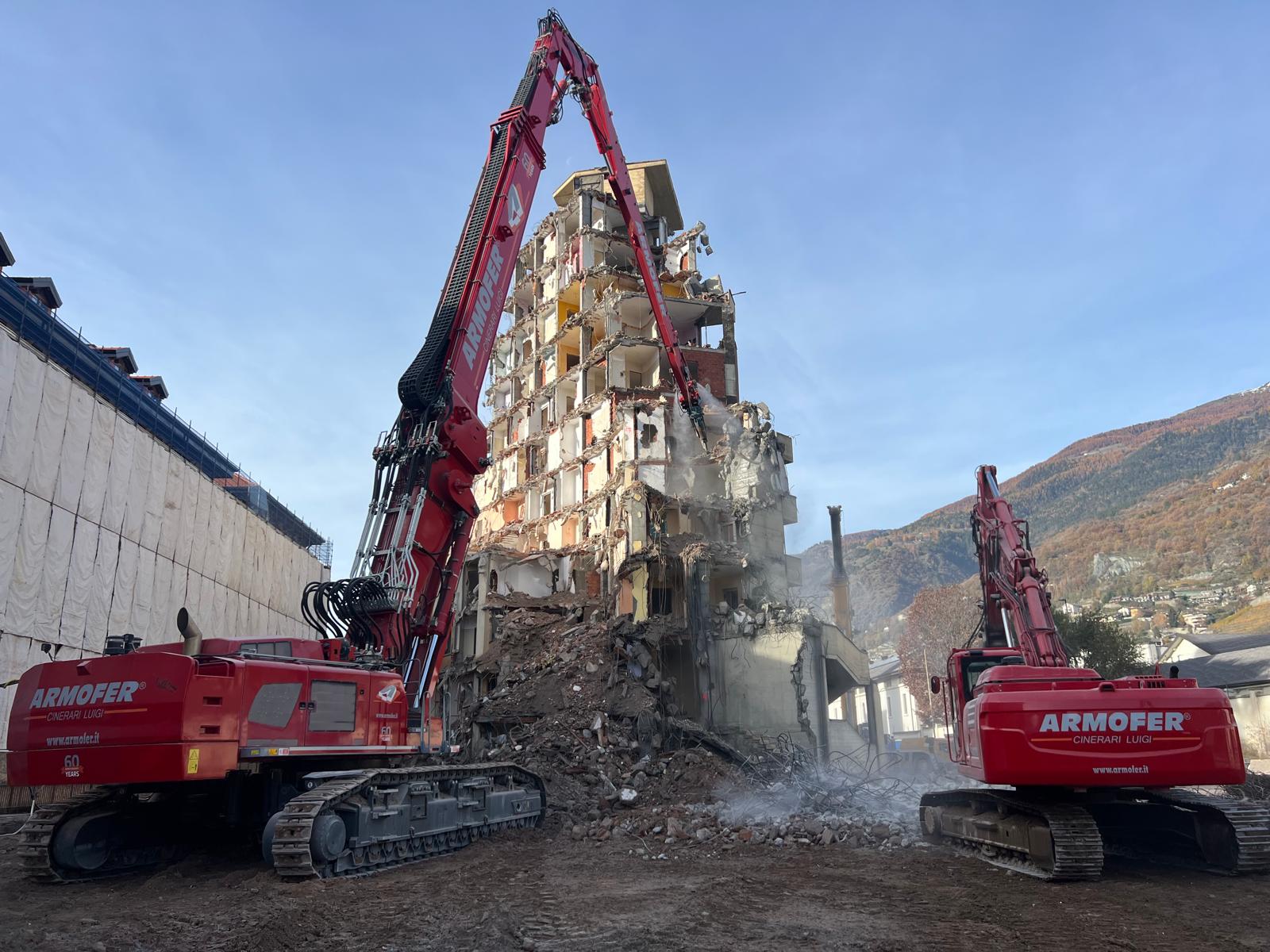
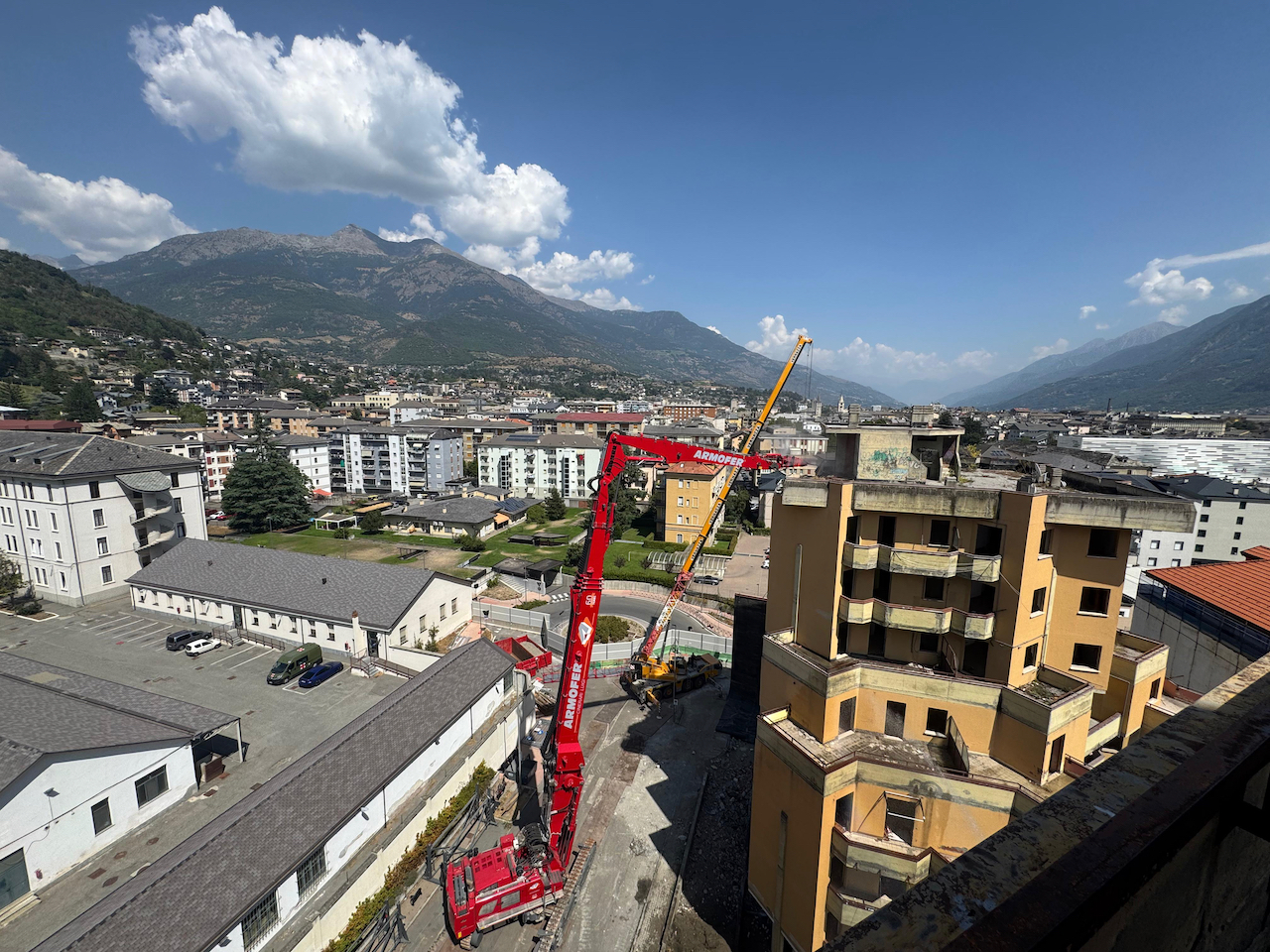
Follow the updates from the demolition site of the two Aosta skyscrapers here. Two concrete giants, 9 and 12 storeys respectively, with operational heights of up to 40 m, are undergoing structural demolition using state-of-the-art technology. In the field are the Zeus 980 and the smaller but brand new Liebherr 950.
Armofer opens a new demolition site in the city of Aosta: the complete demolition of the two multi-storey buildings known as the 'Aosta skyscrapers', respectively 9 and 12 storeys above ground, in the Cogne district.
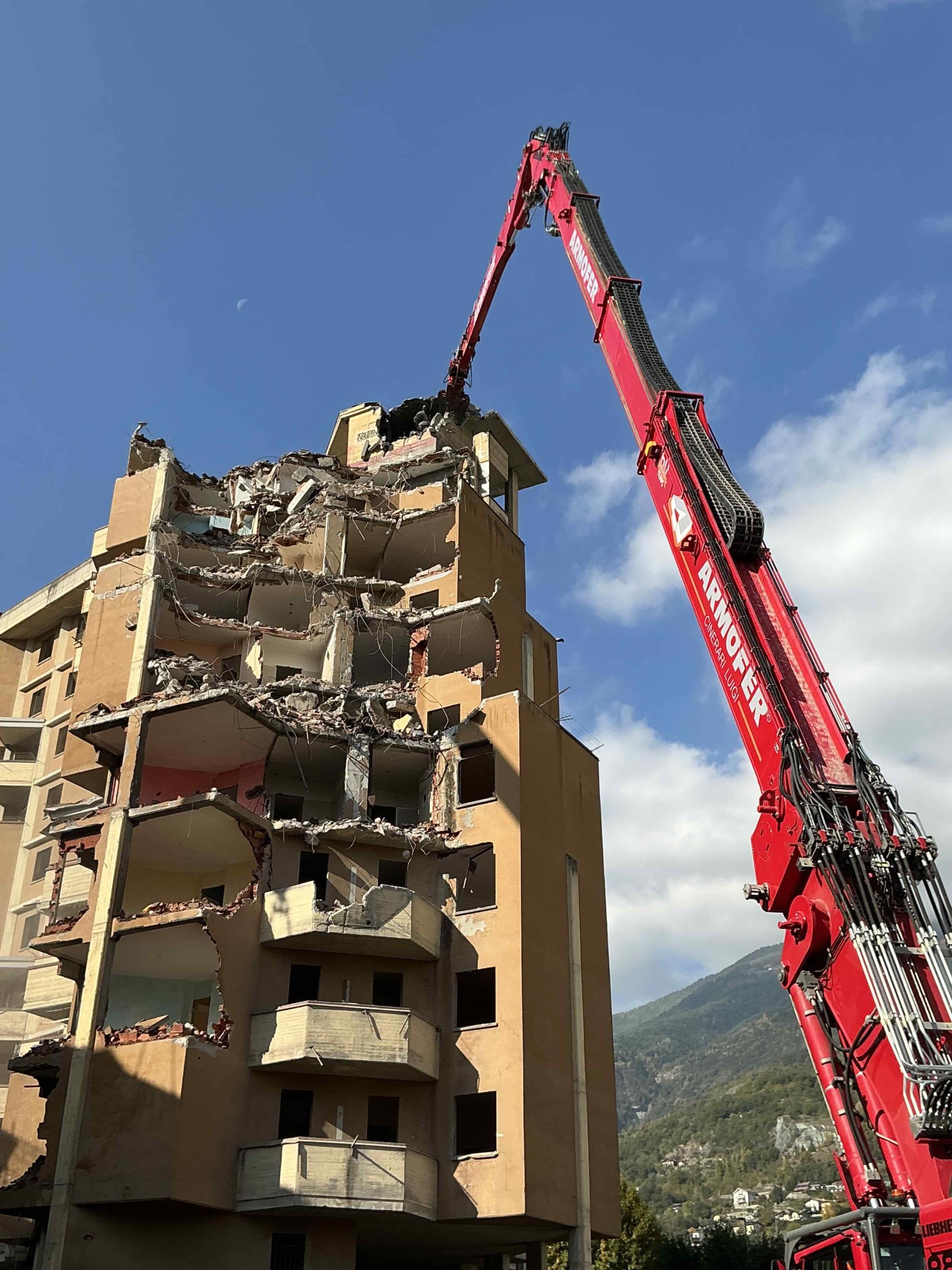
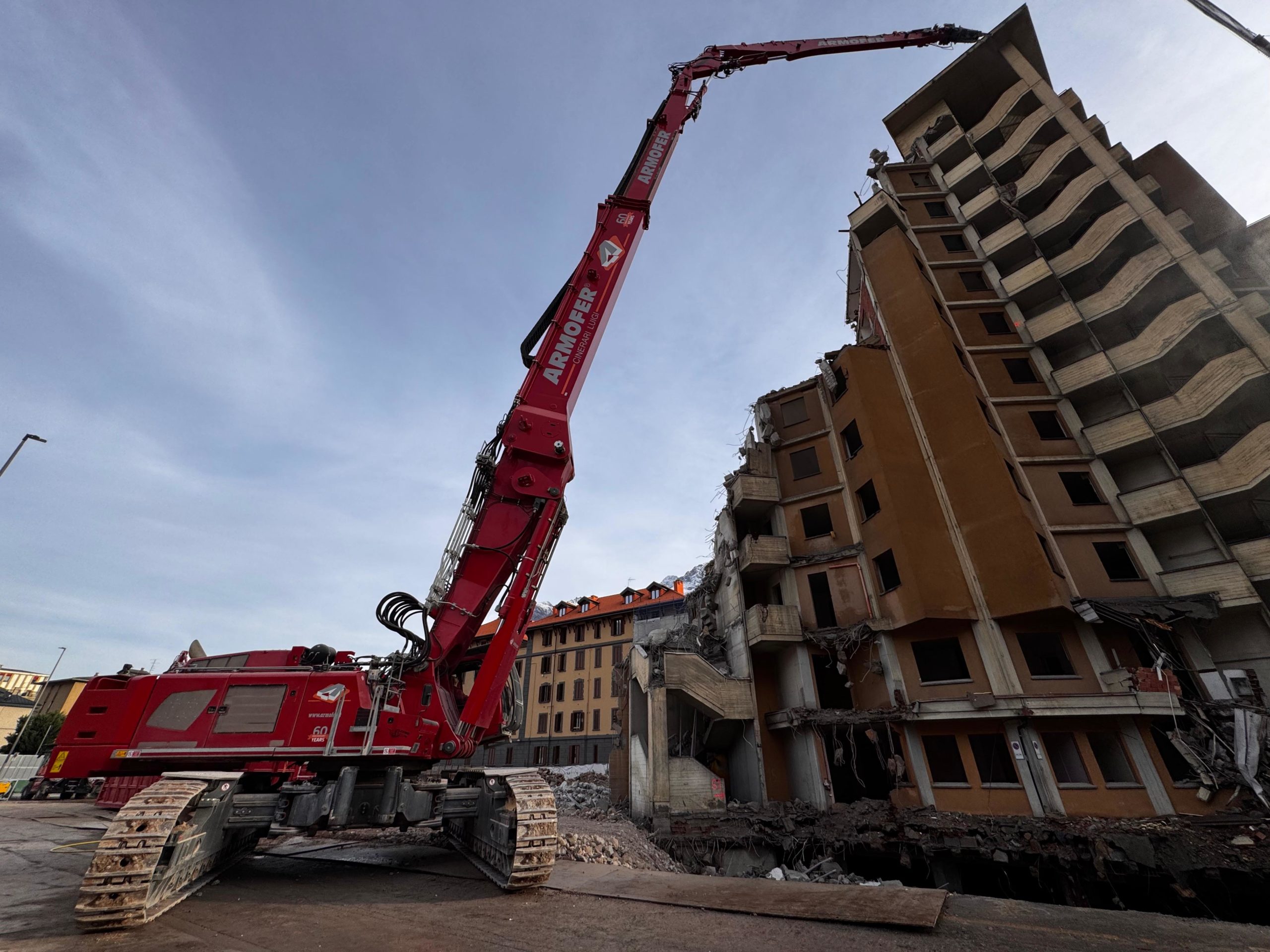
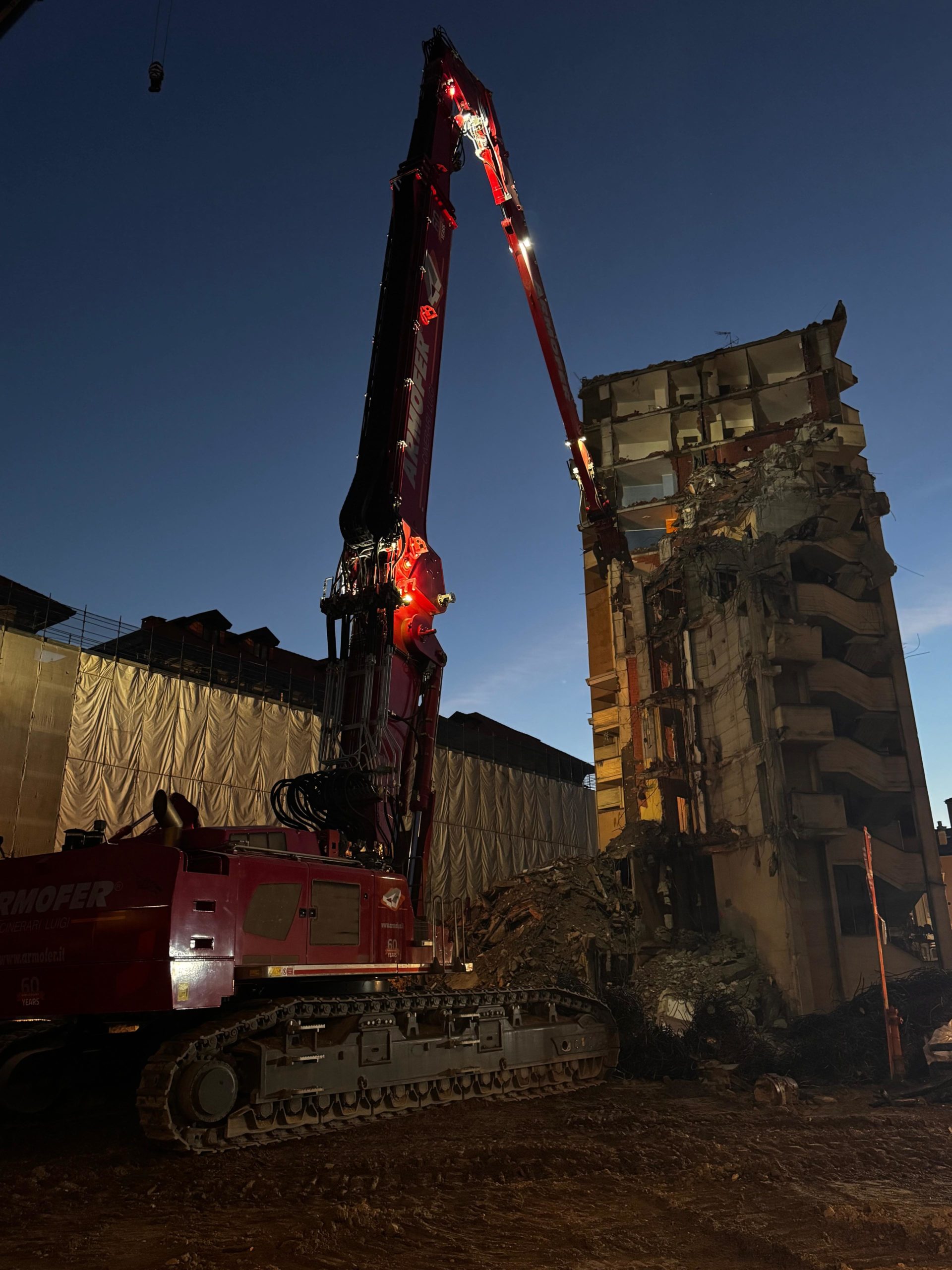
After winning the tender and following the municipal resolution of 17 April last, Armofer officially opened the construction site a few days ago, for which the executive project, carefully studied by the technicians, envisages a spectacular demolition at great height, carried out with a very special demolition machine: Zeus Liebherr 980 in its 60 m high set-up.
This spectacular phase will, of course, be preceded by adequate verification preparation, selective stripout of structures and plants for their proper disposal and recovery, and, where necessary, reclamation of environmental liabilities. During the works, in coordination with ARPA, environmental monitoring and mitigation works are planned.
The city of Aosta had been waiting for this day since the early 2000s, due to the serious structural criticality of the two buildings. The Municipality of Aosta will fully finance the urban regeneration operation, worth over 5 million euro. The project was very demanding and was developed through no less than 128 technical documents and meticulously checked by Studio INART srl of Courmayeur with the contribution of the Municipal Administration's T3-PPR Stabili area operators, who accompanied the project every step of the way with competence and spirit of service.
At the end of the demolition a new Urban Park, a green space at the disposal of the city, will be created, which has already been financed under the PINQUA programme (Innovative Programme for Quality Living).
ARRIVAL OF MACHINES ON SITE
3 June 2025
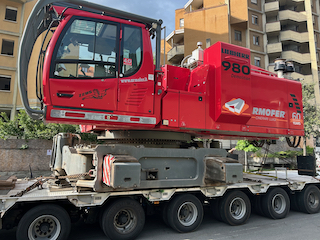
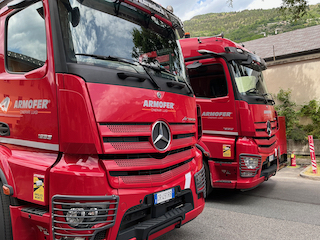
On the morning of 3 June, a column of seven 'exceptional transport' convoys left Siziano bound for Aosta.
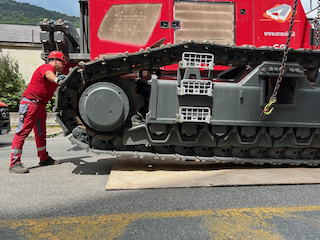
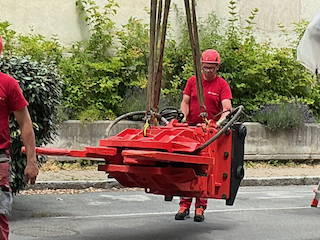
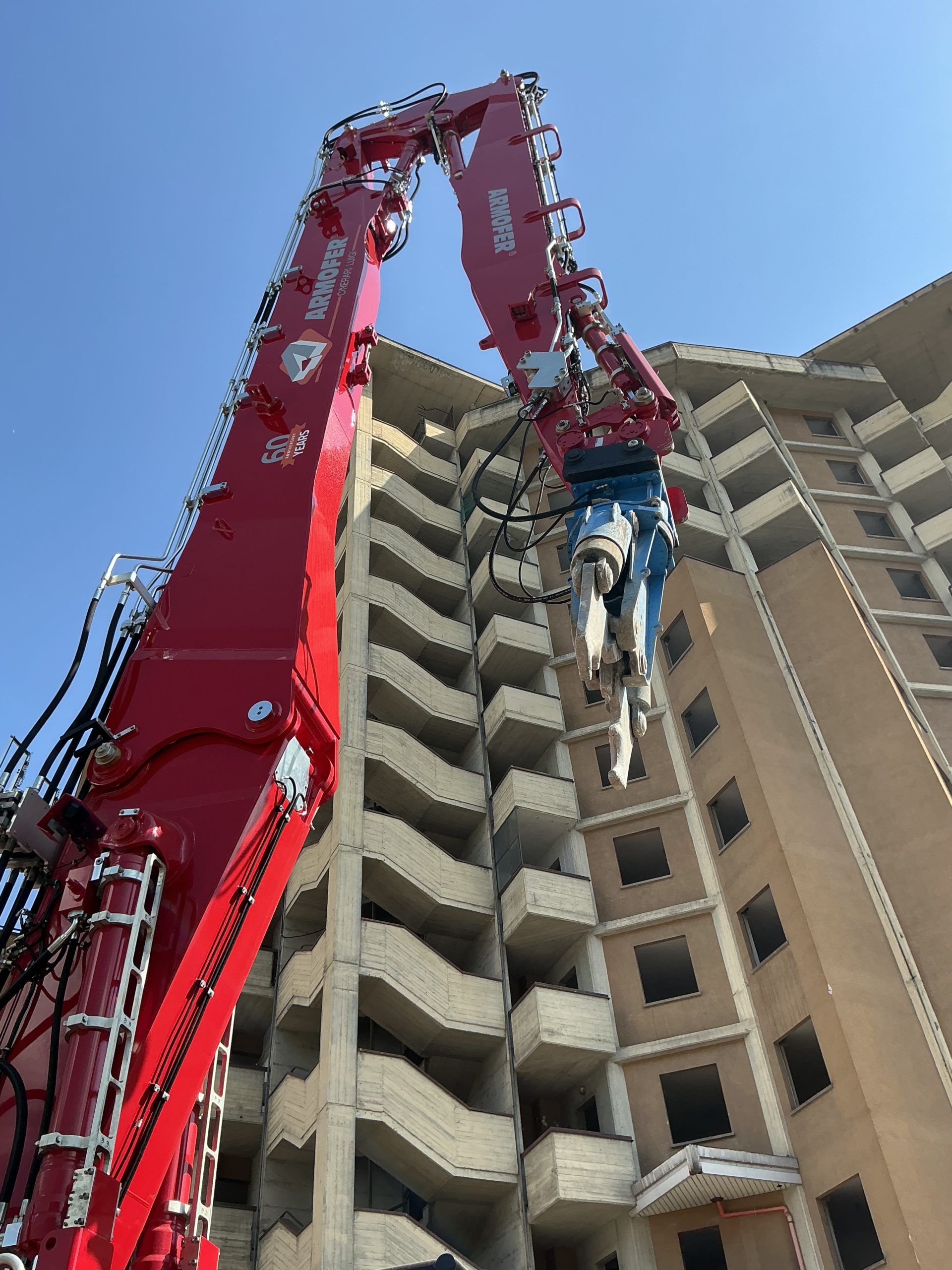
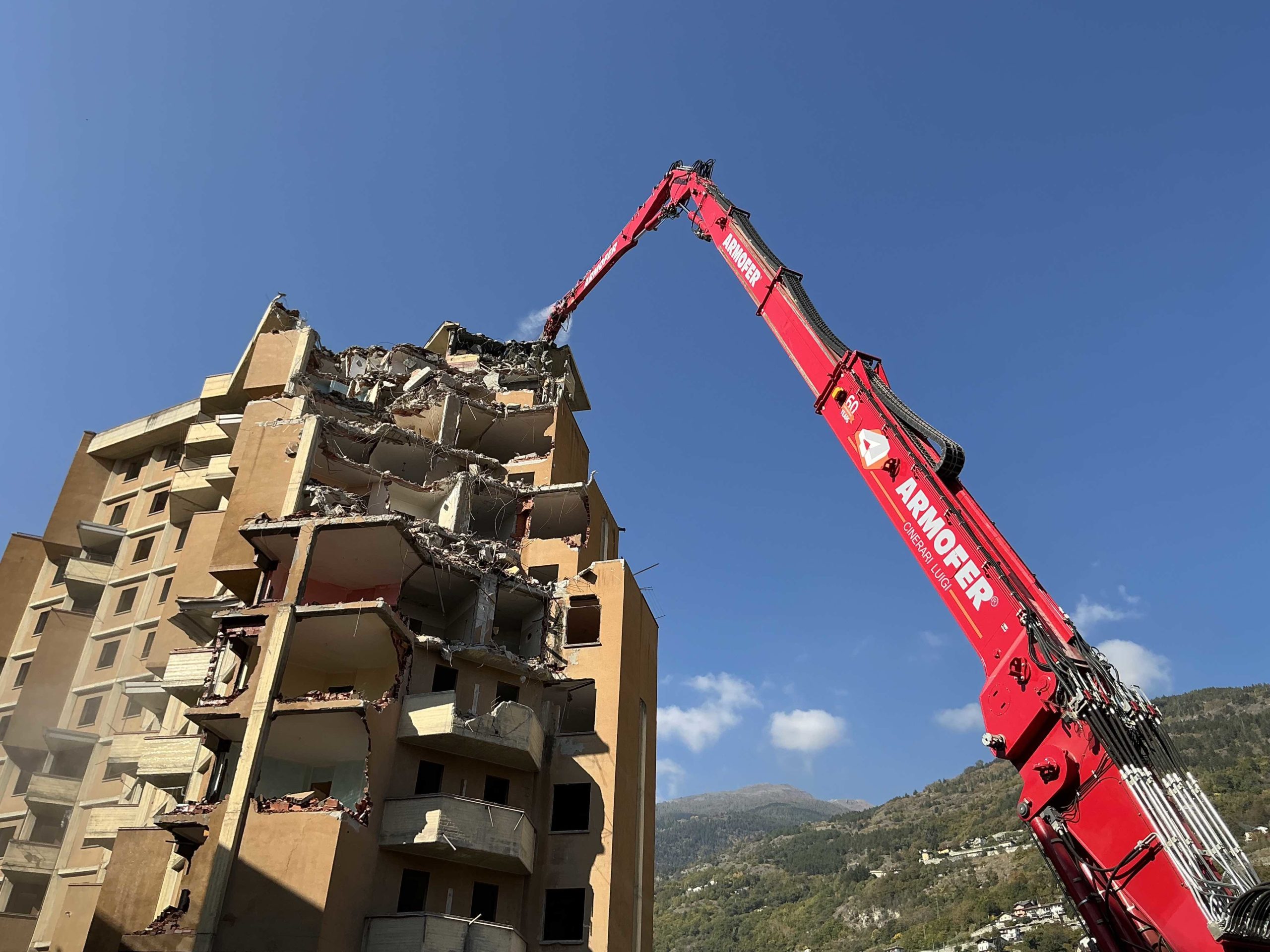
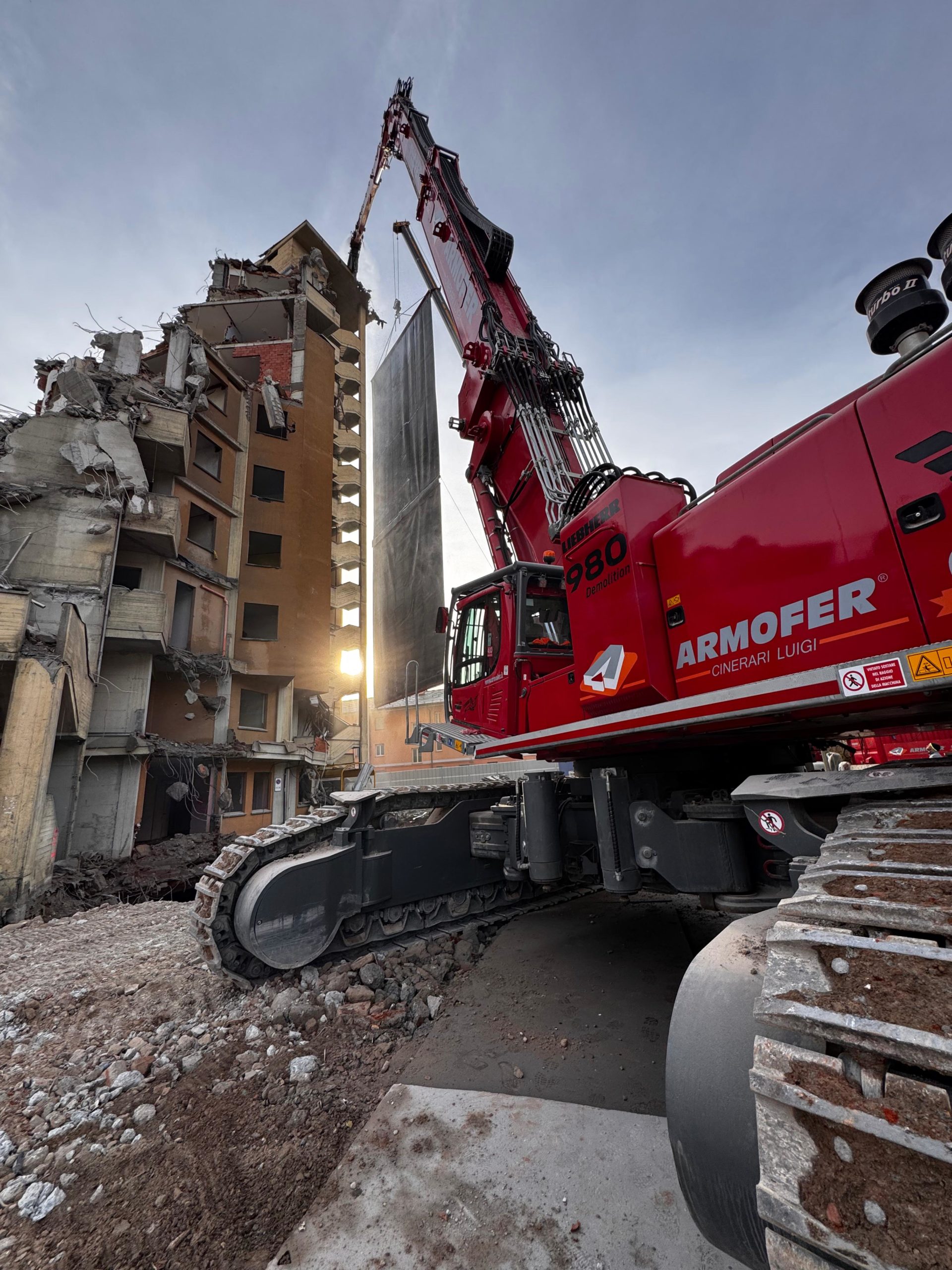
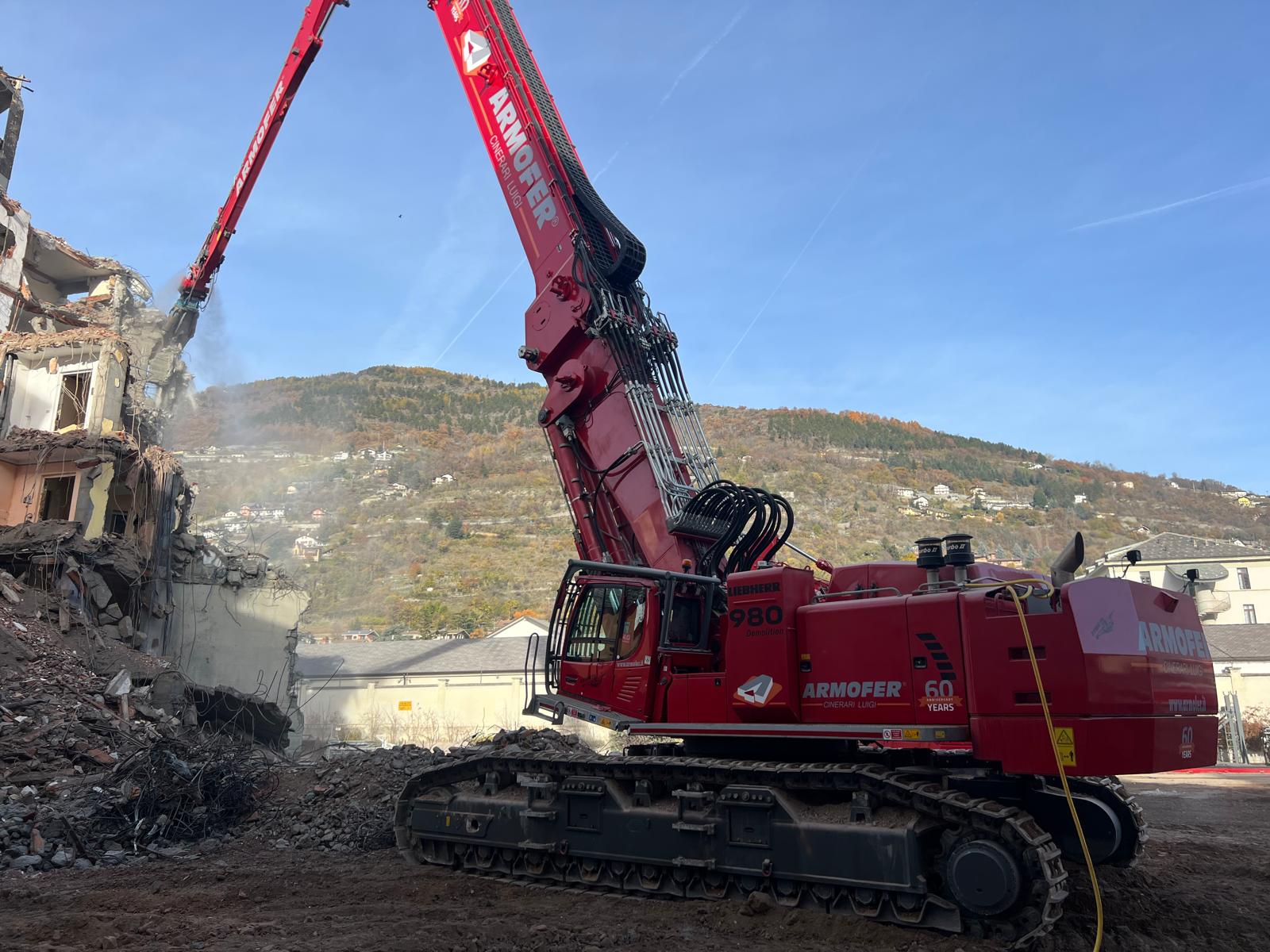
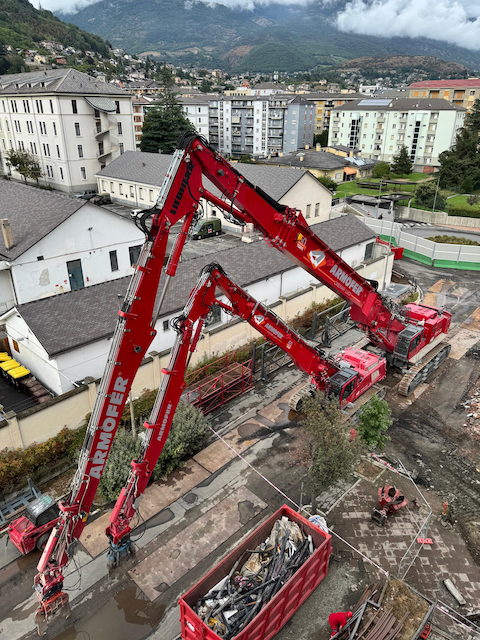
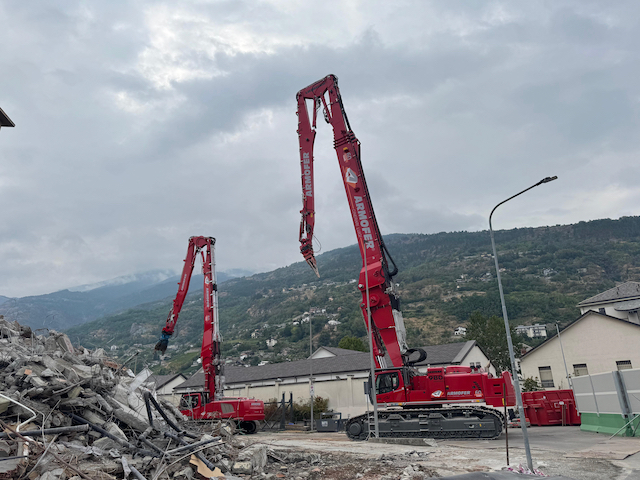
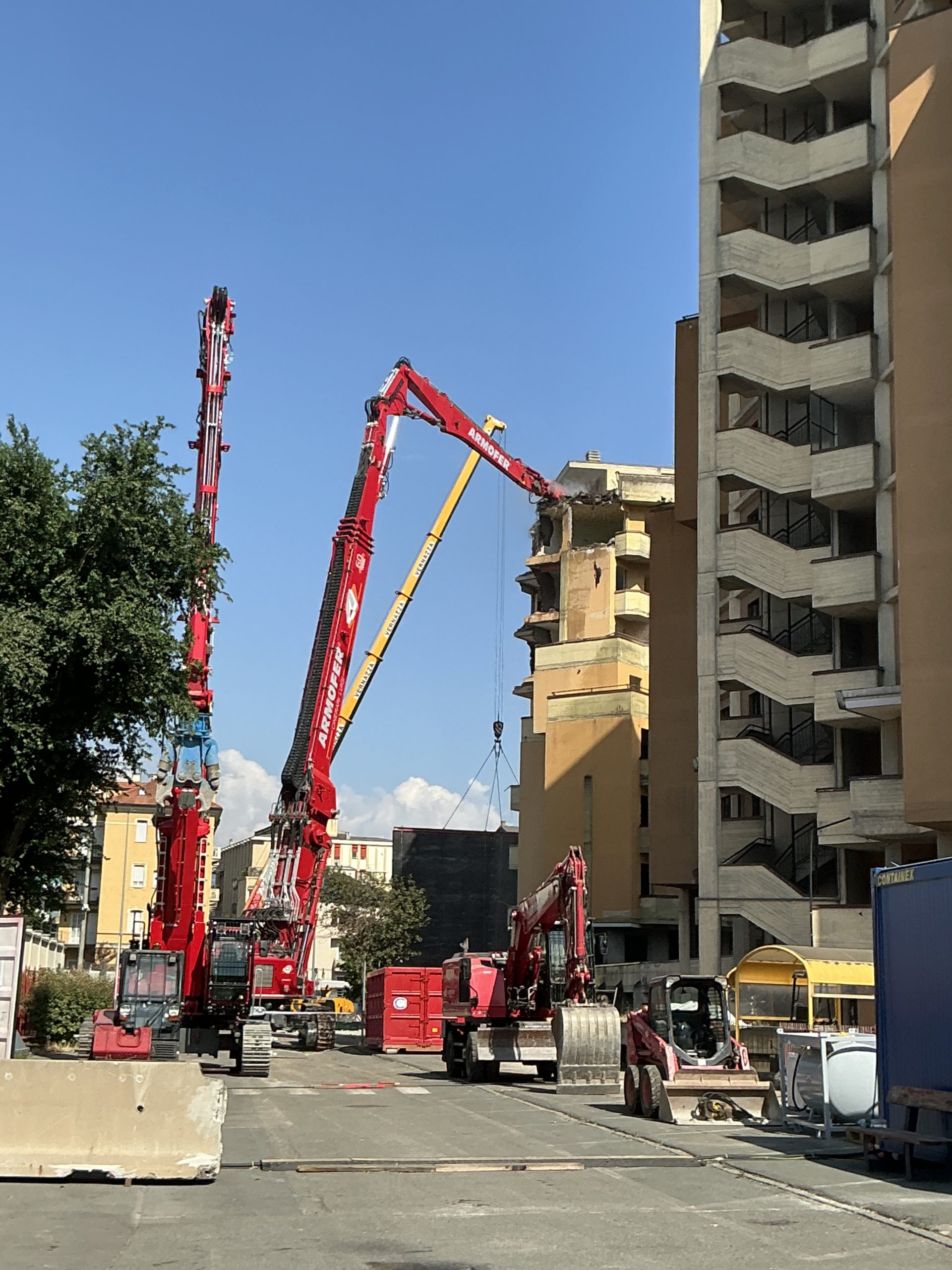
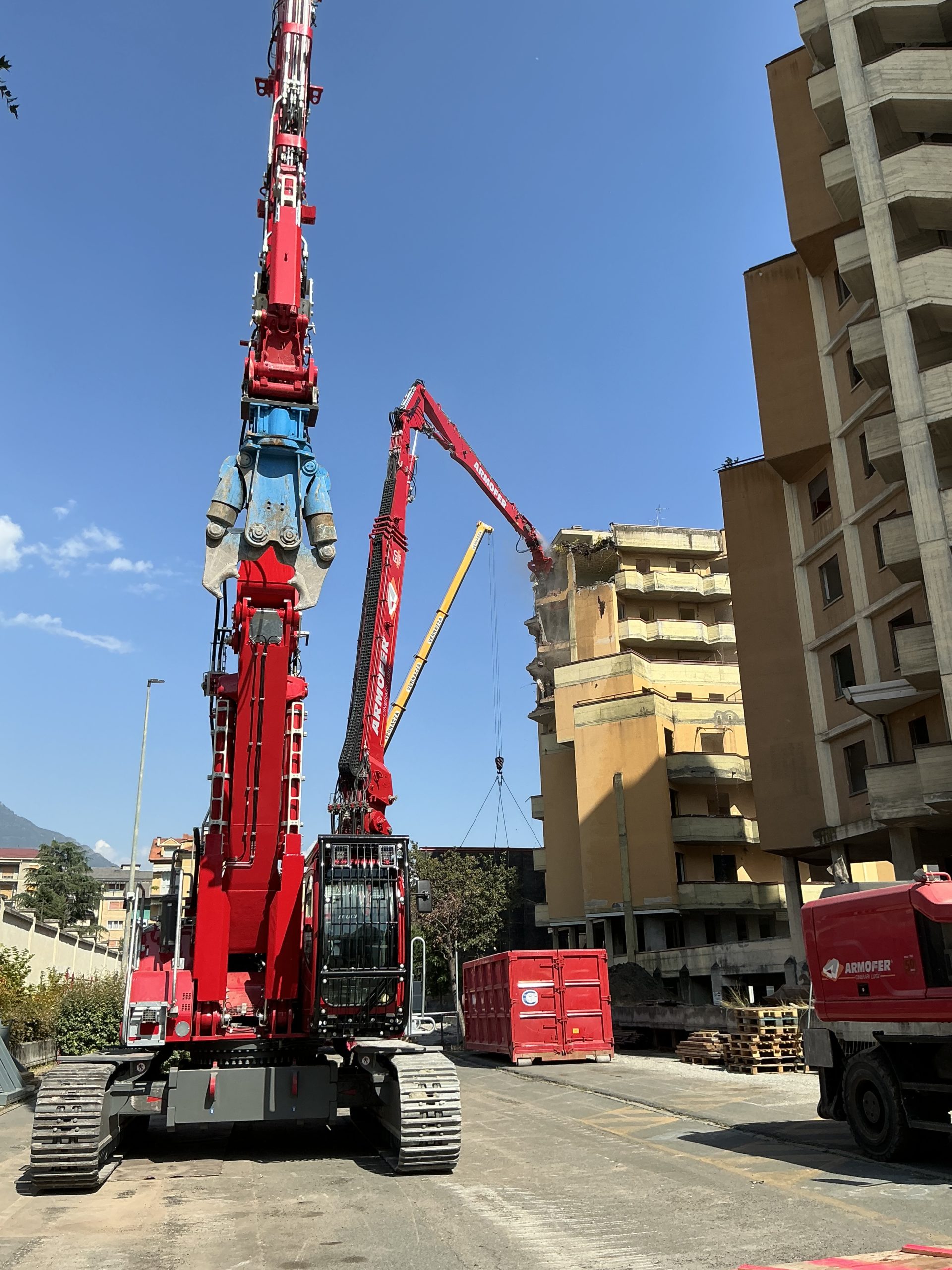
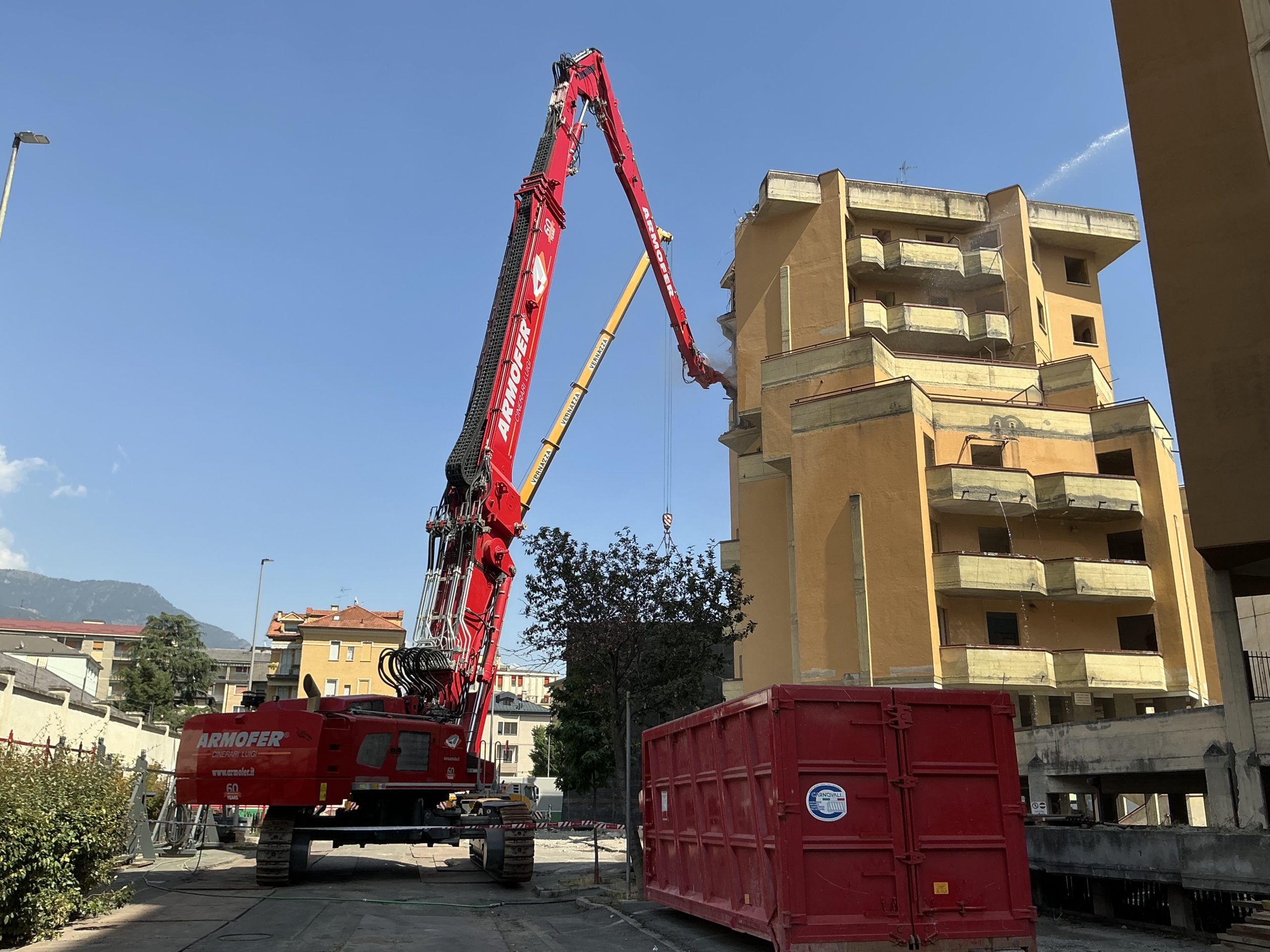
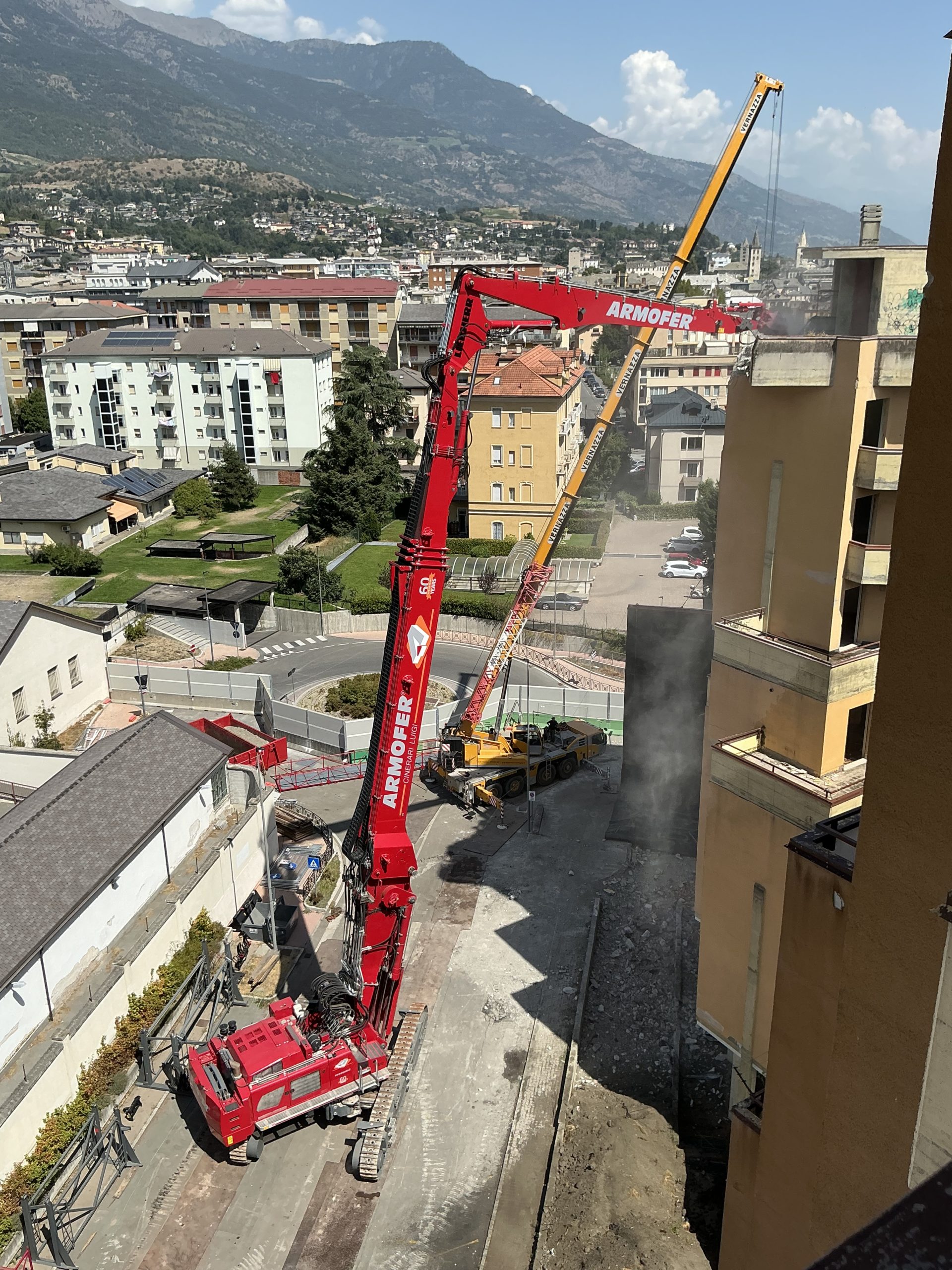
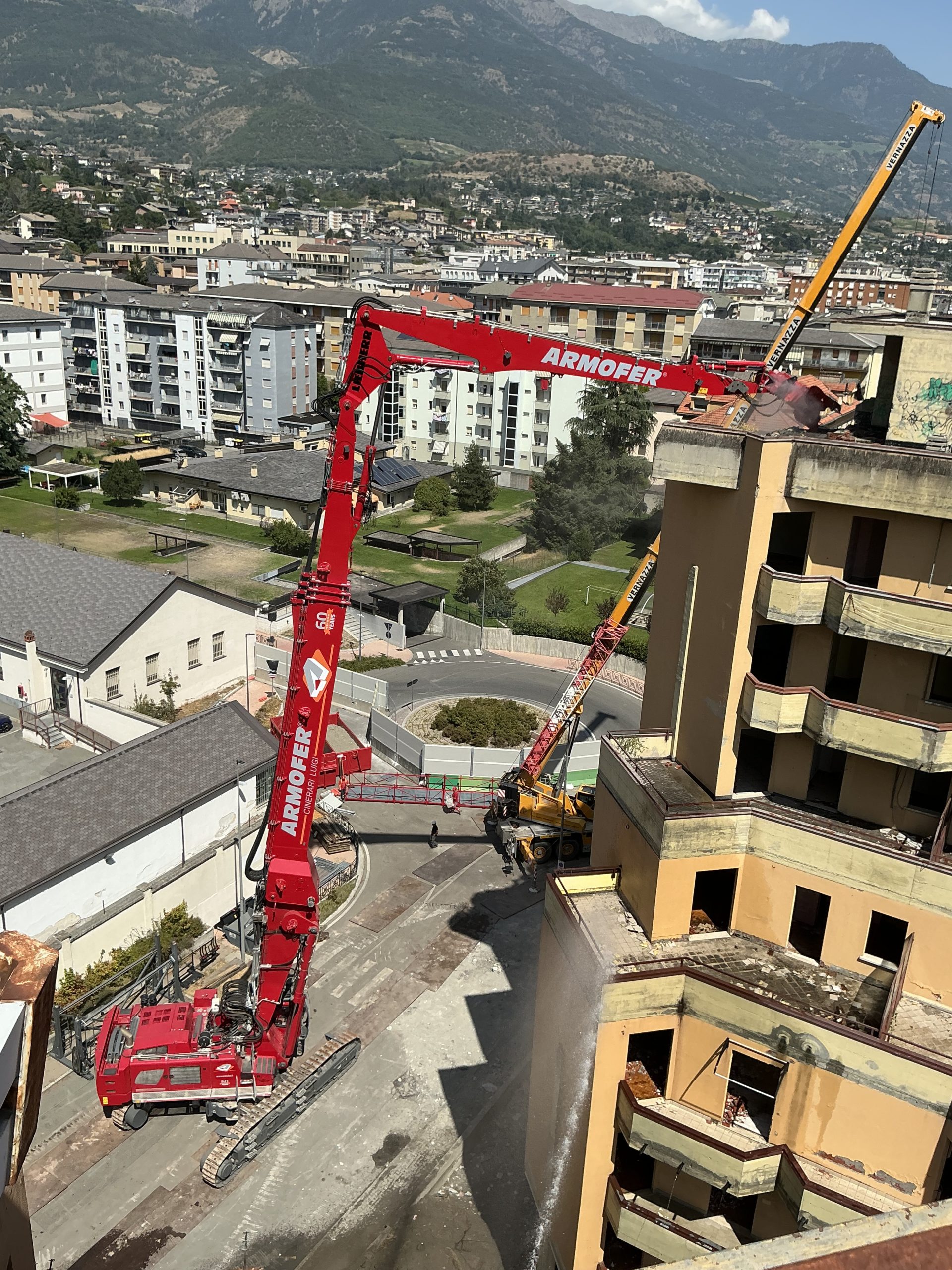
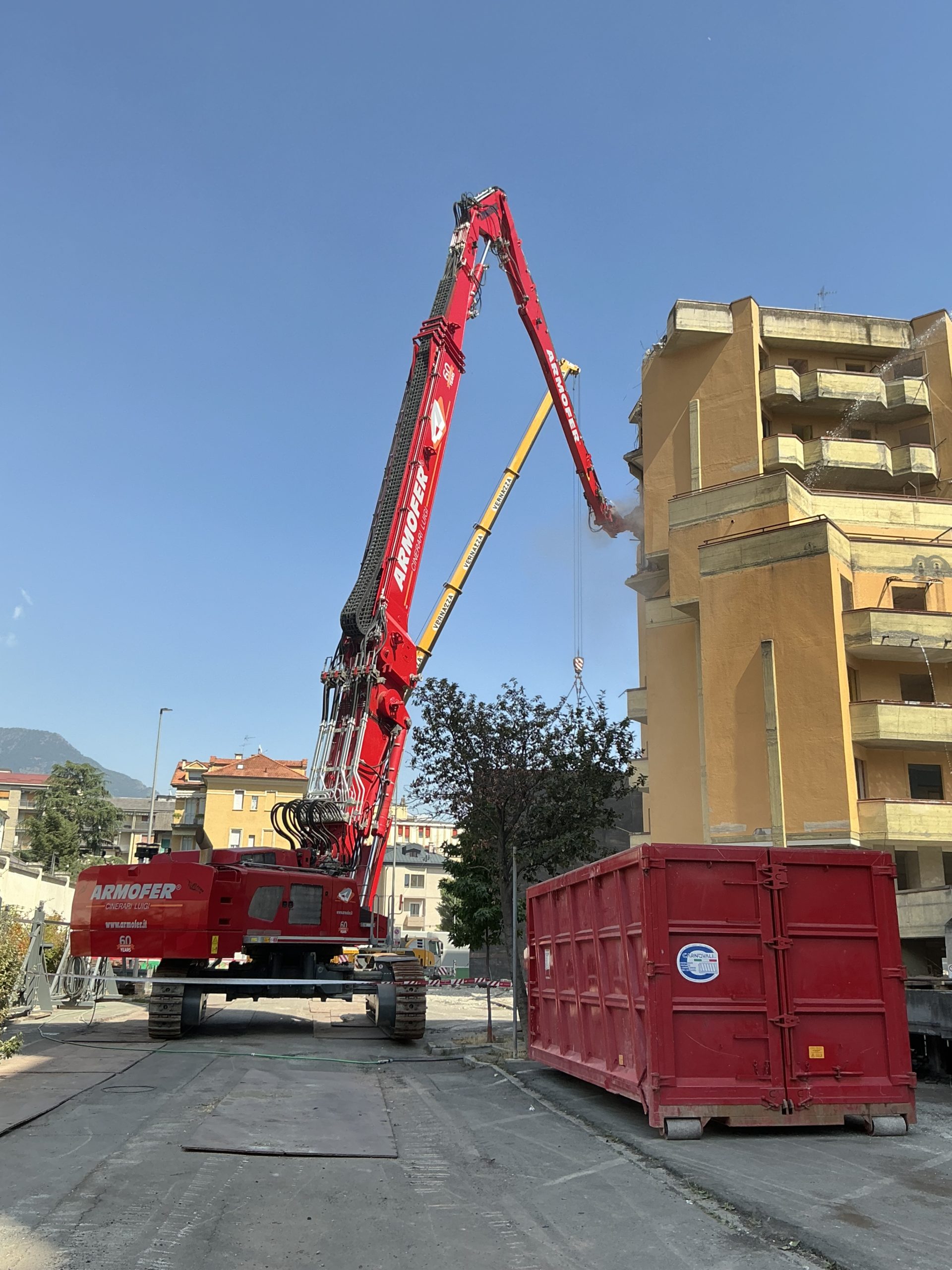
It will be Zeus 980, the flagship of the Armofer fleet, that will demolish the two multi-storey buildings. The machine arrives on site disassembled, due to its weight and size. It required Armofer's team of mechanics and drivers for unloading, handling and assembly. The operation took, including testing, two days. Despite its imposing size, Zeus is an extremely flexible technology that Armofer has customised, in collaboration with the manufacturer Liebherr, precisely to make it easier to transport and set up on site. It is a latest-generation machine equipped with the most up-to-date safety and control systems, from the extendable undercarriage for greater stability, tiltable cab, automatic outreach control, integrated front-end spraying system and also including video cameras on the boom and at the tip, and HD monitor in the cab.
Alongside Zeus, another exceptional demolition technology is on the way: Liebherr 950 crawler excavator, class 80 ton, is brand new: christening of the site right in Aosta.
Below are the main technical characteristics of the vehicles:
- Model: Liebherr 980 demolition
- Year of construction: 2023
- Operating weight: 200 ton
- Demolition booms: 3 + extension 6 m
- Max. working height at pivot: 60 m
- Model: Liebherr 950 demolition
- Engine power: 220 KW
- Year of construction: 2025
- Operating weight: 80 ton
- Max. working height at pivot: 27.50 m
FIRST 'CLAMPING' CEREMONY
11 August 2025
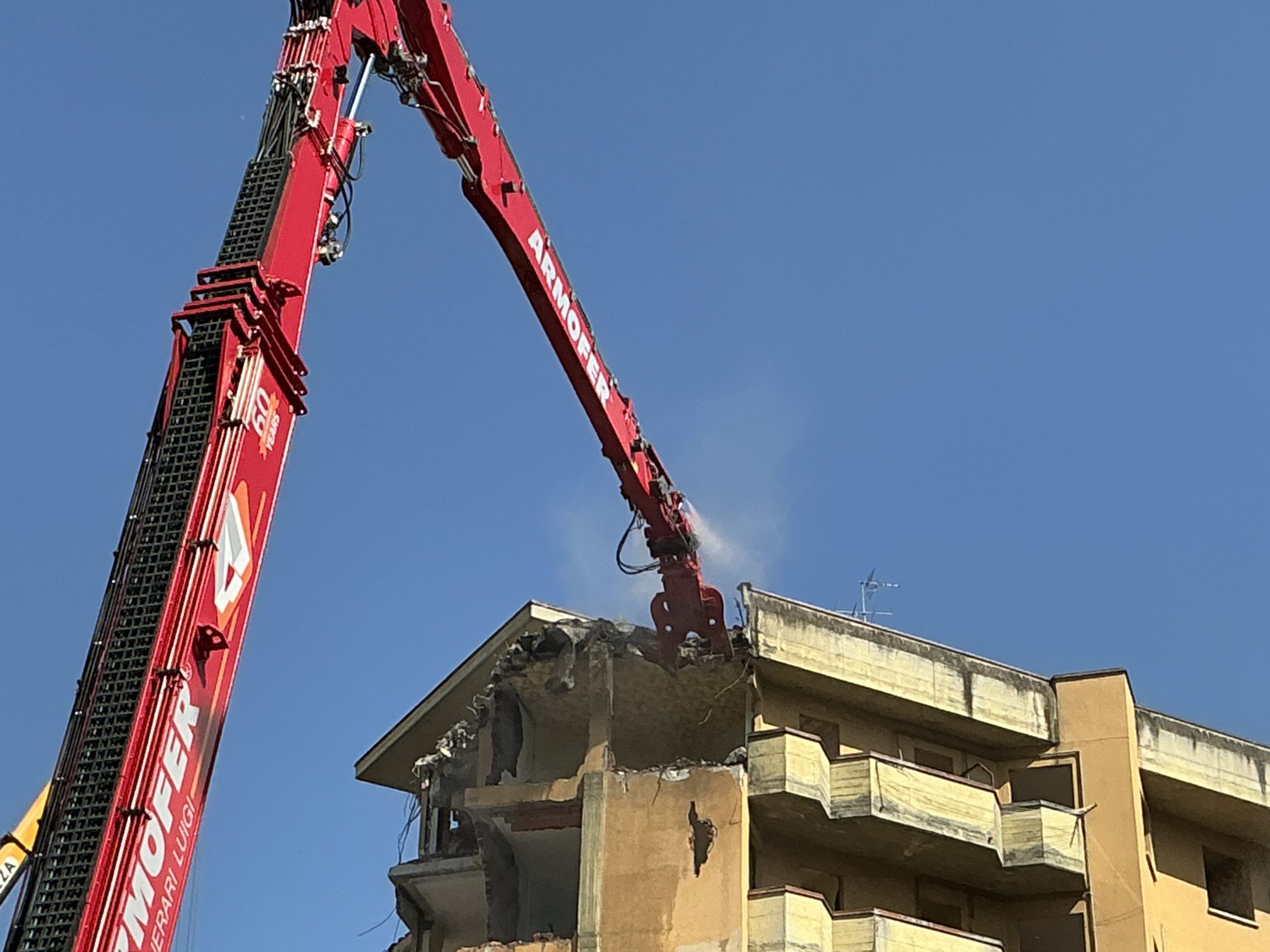
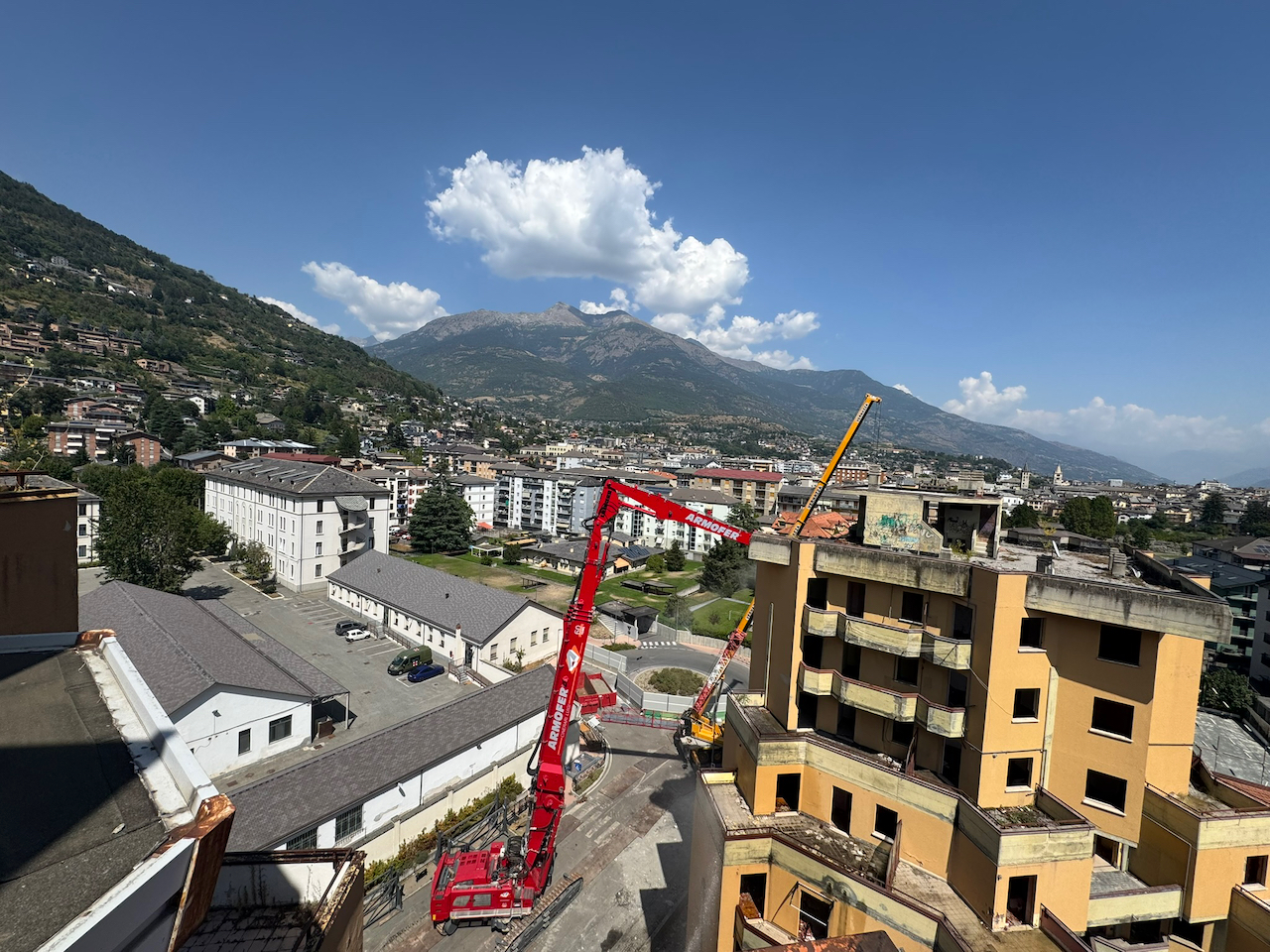
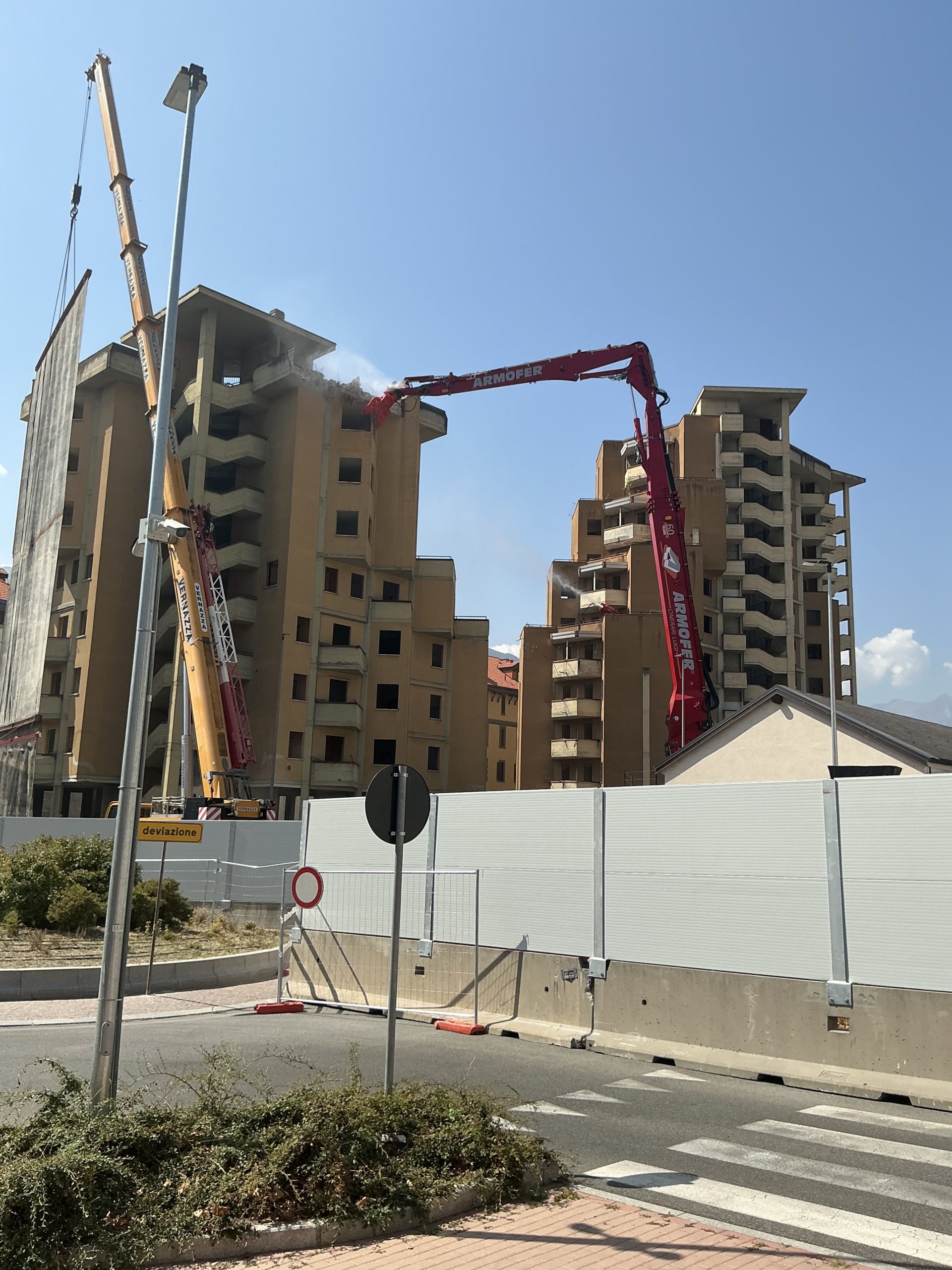
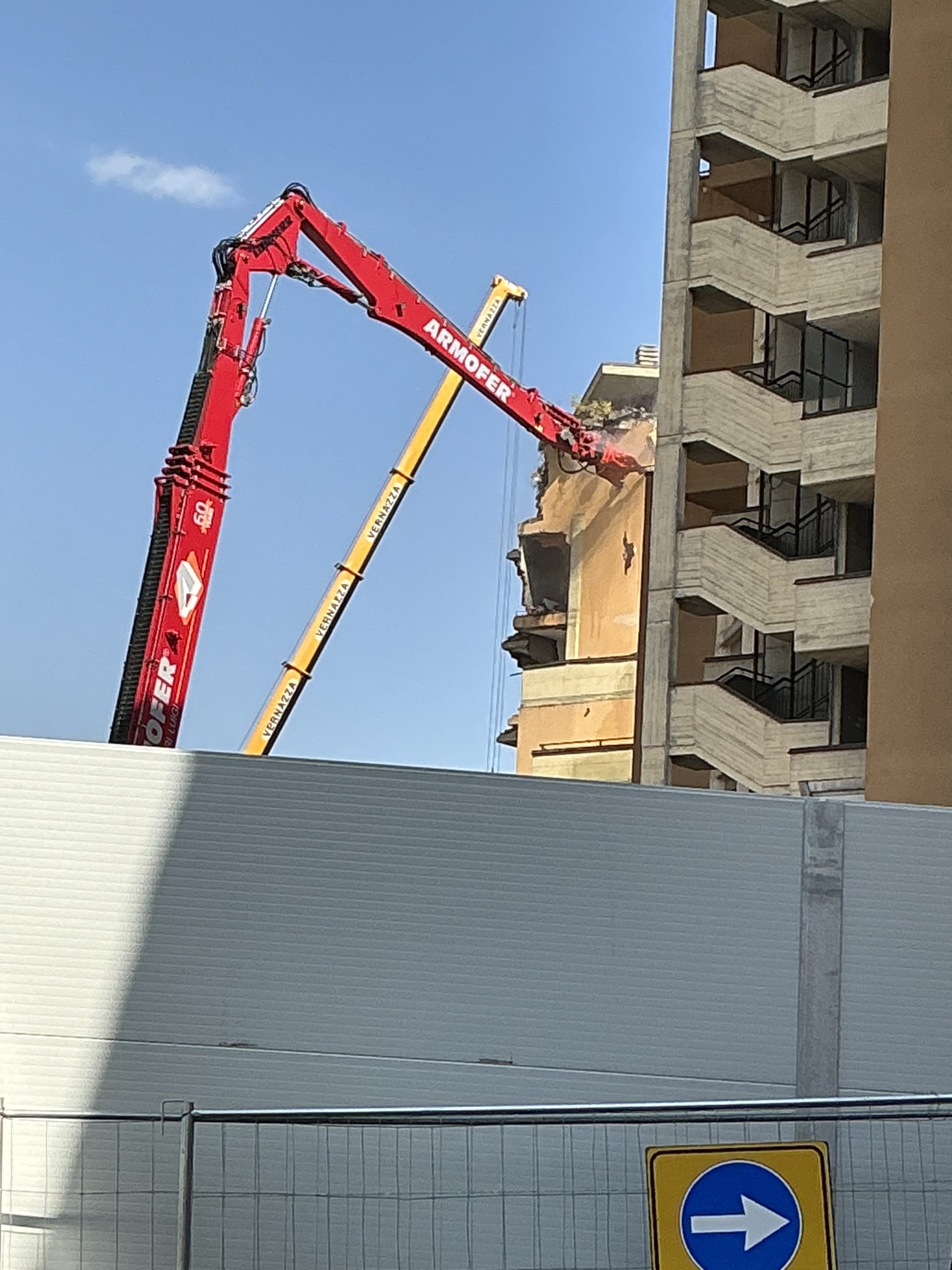
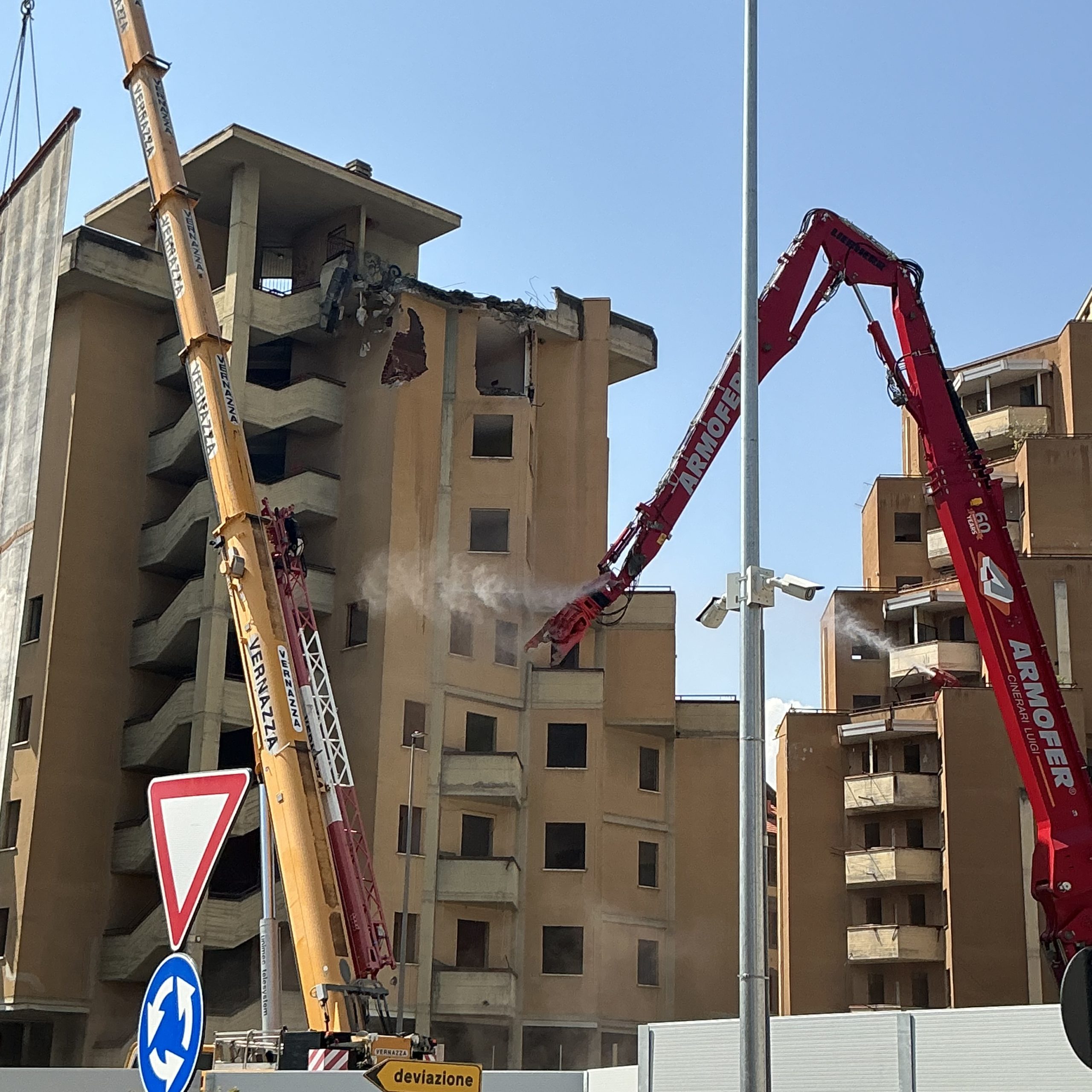
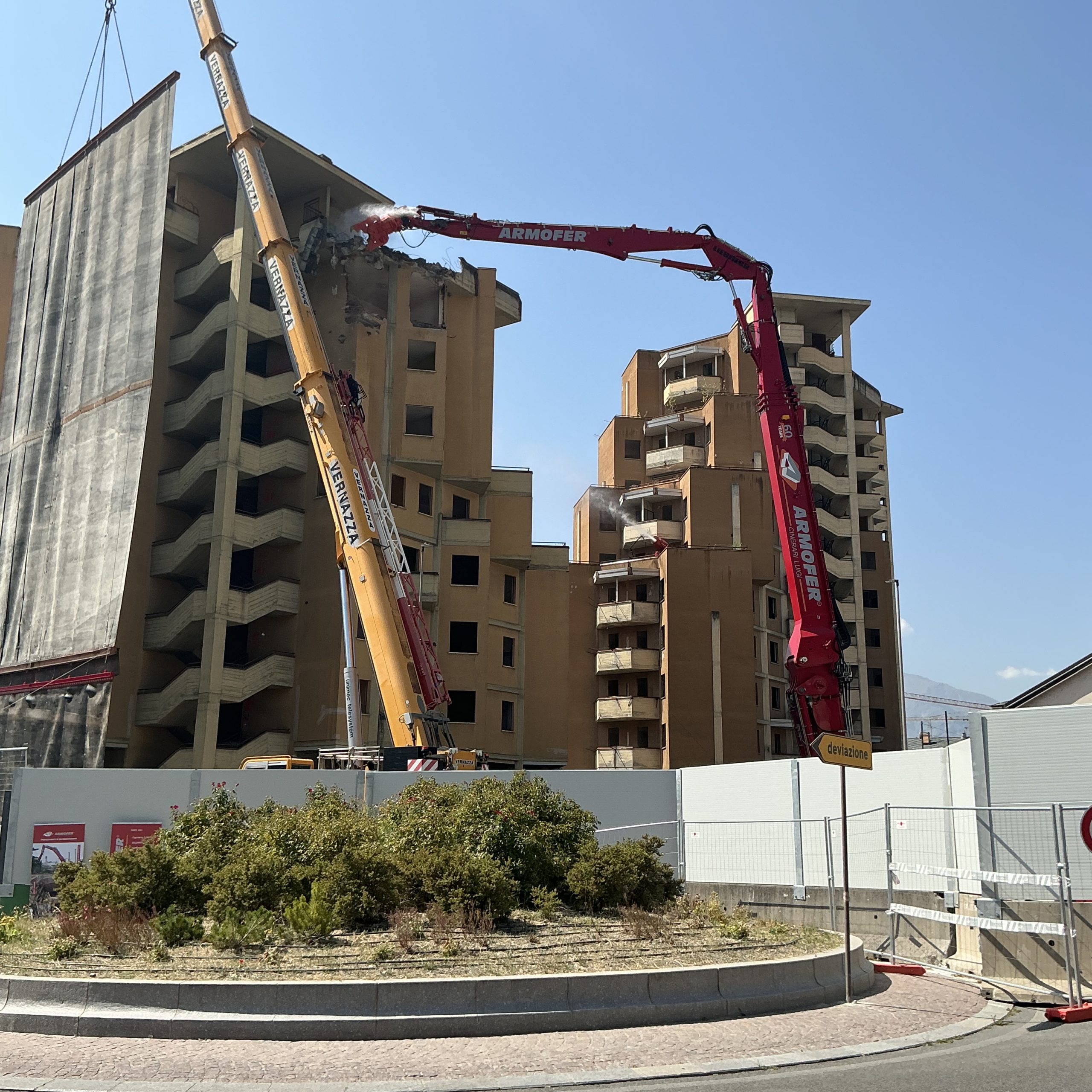
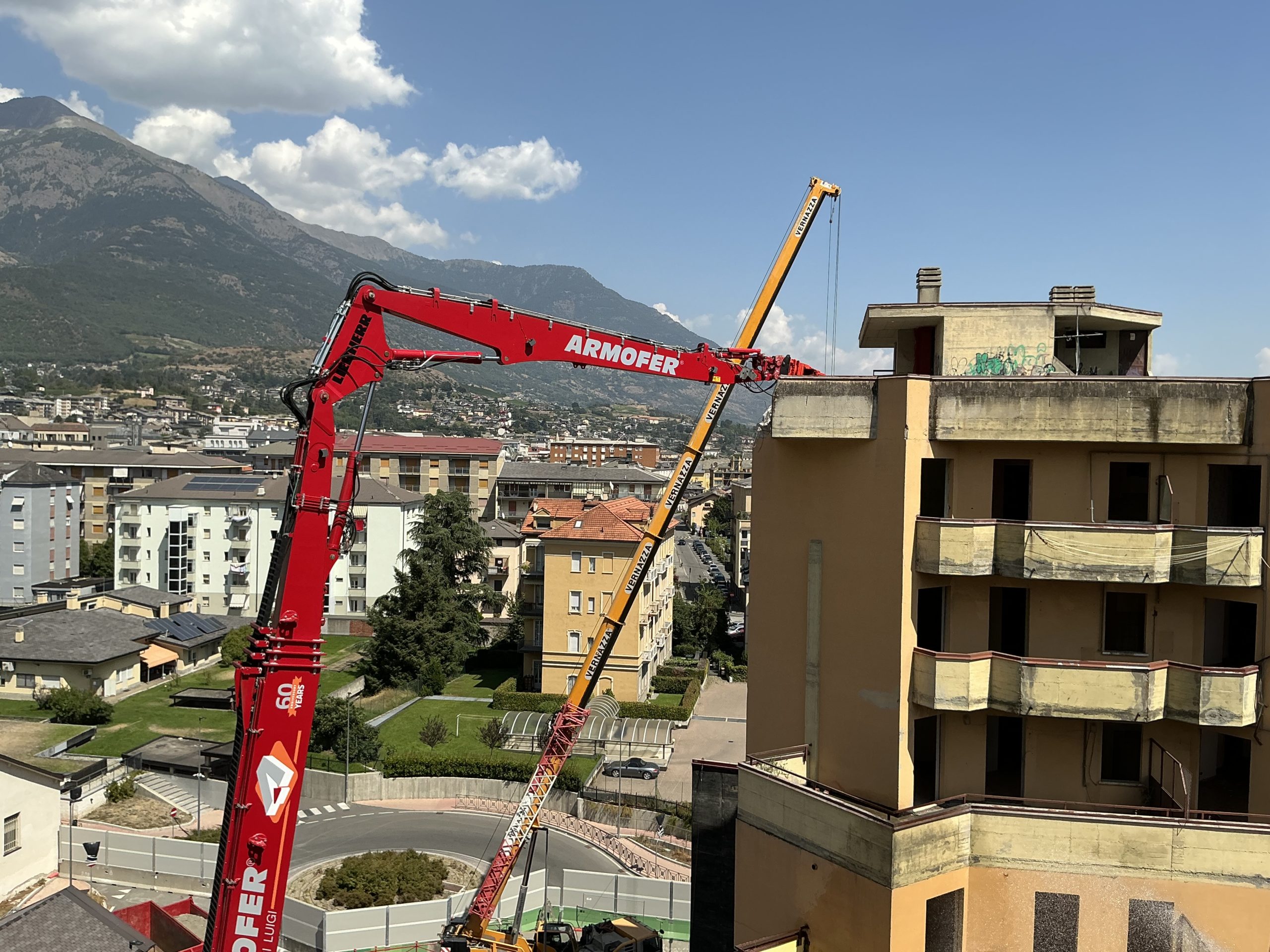
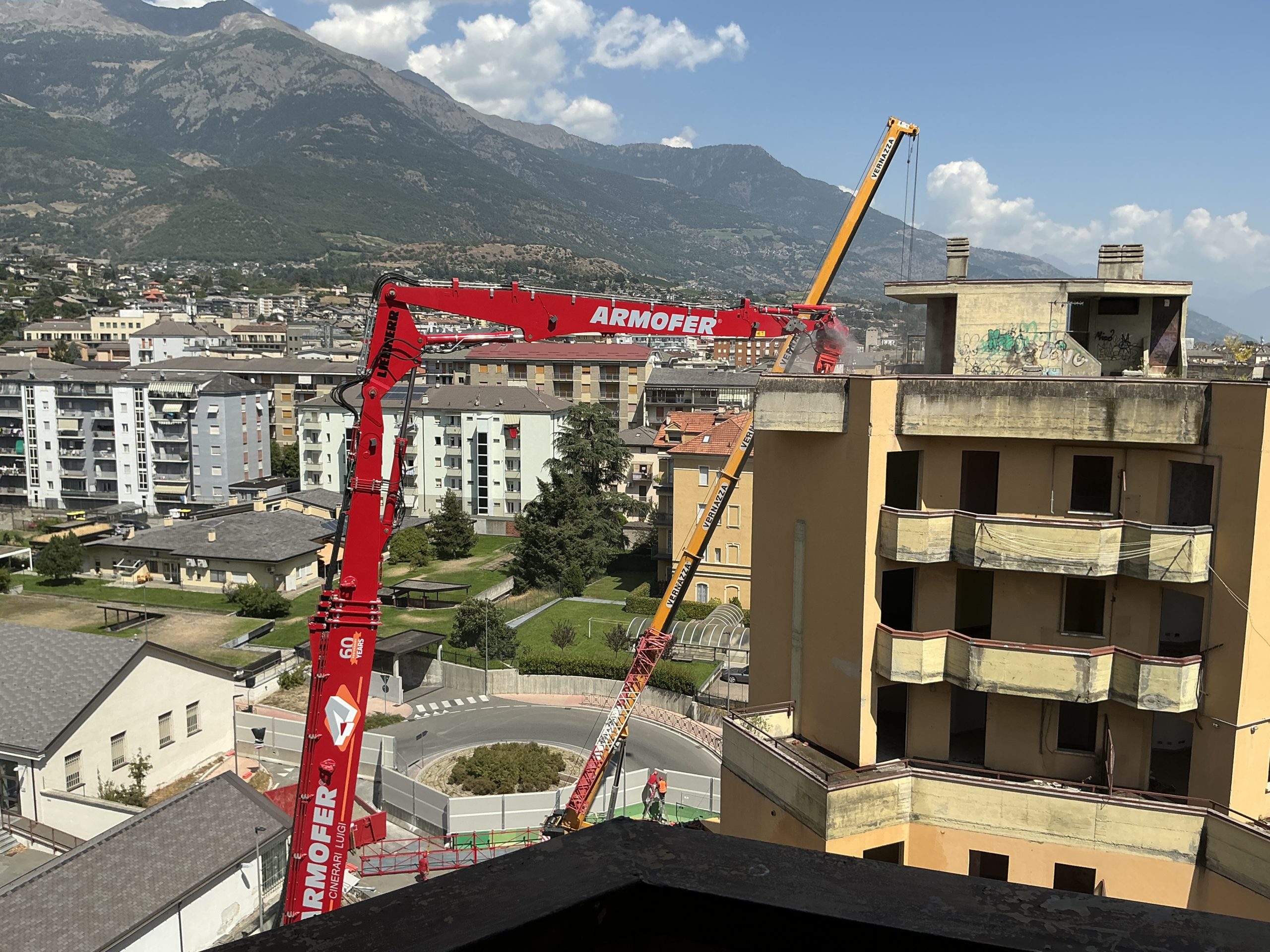
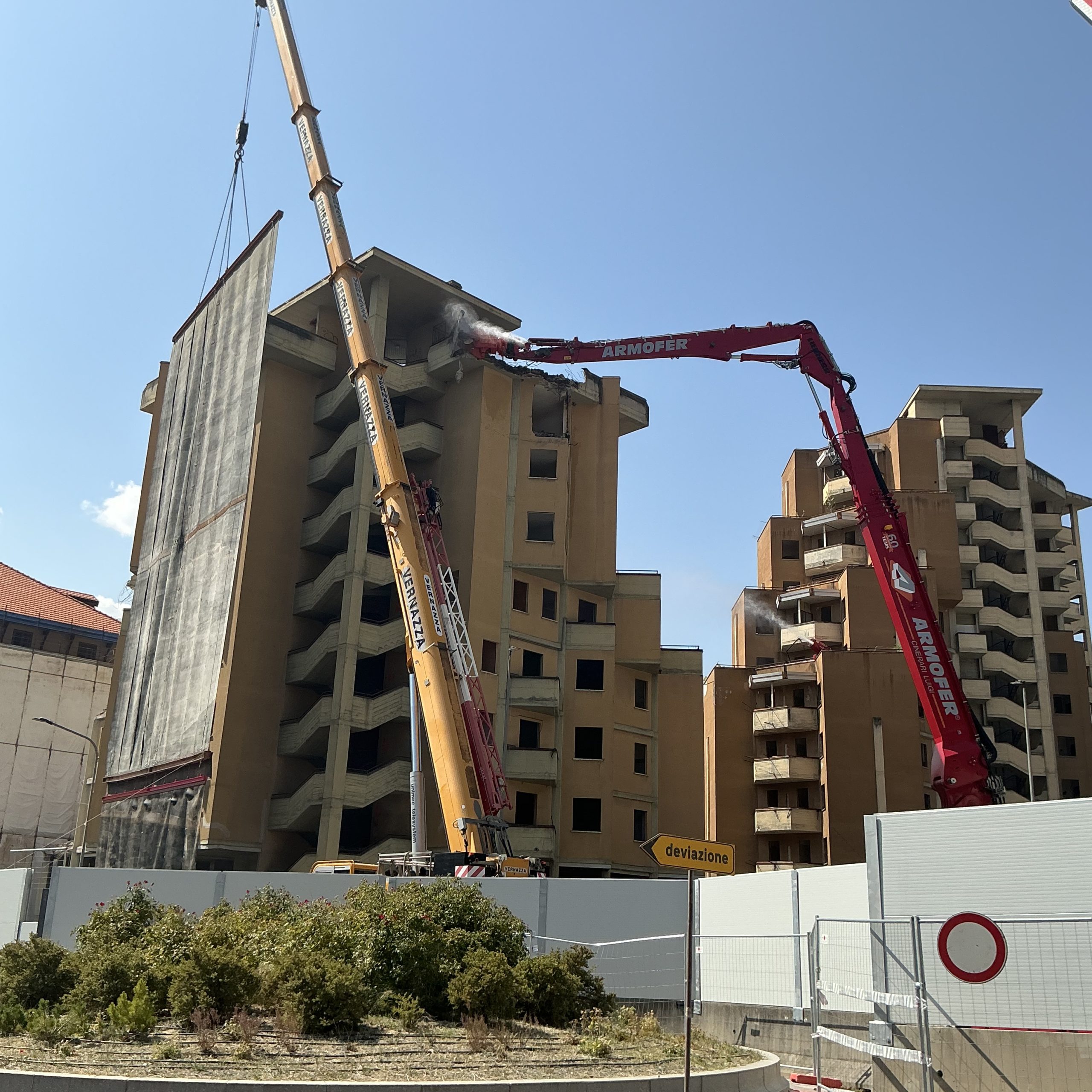
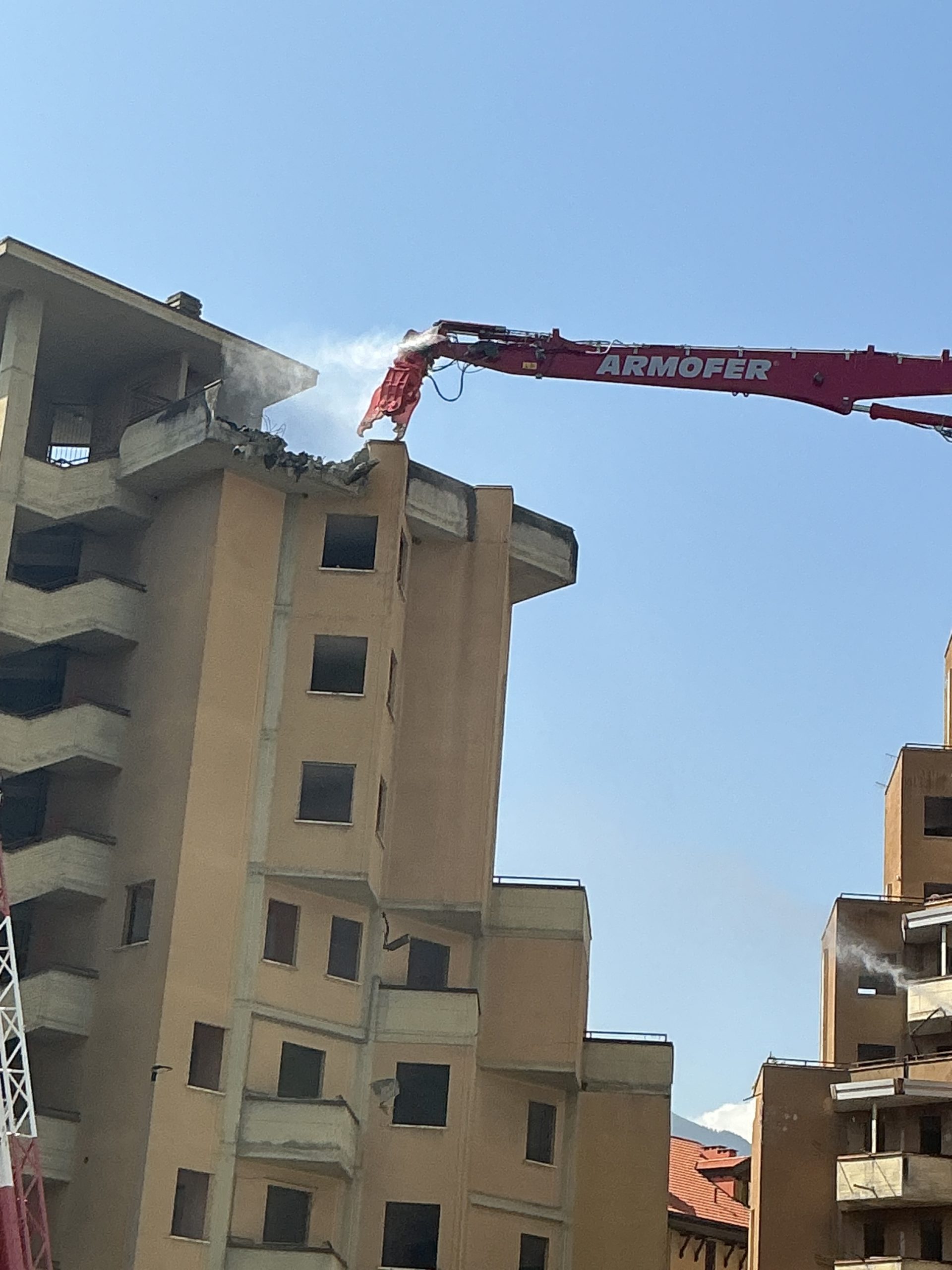
In the presence of the Authorities, journalists, TV, and the citizens of Aosta, Armofer began the most spectacular phase of the demolition work on the Aosta skyscrapers: the mechanical demolition of the buildings carried out with two exceptional machines, the Liebherr 980 Zeus and the brand new Liebherr 950 demolition, equipped with mechanical booms and pincers to safely demolish the concrete.
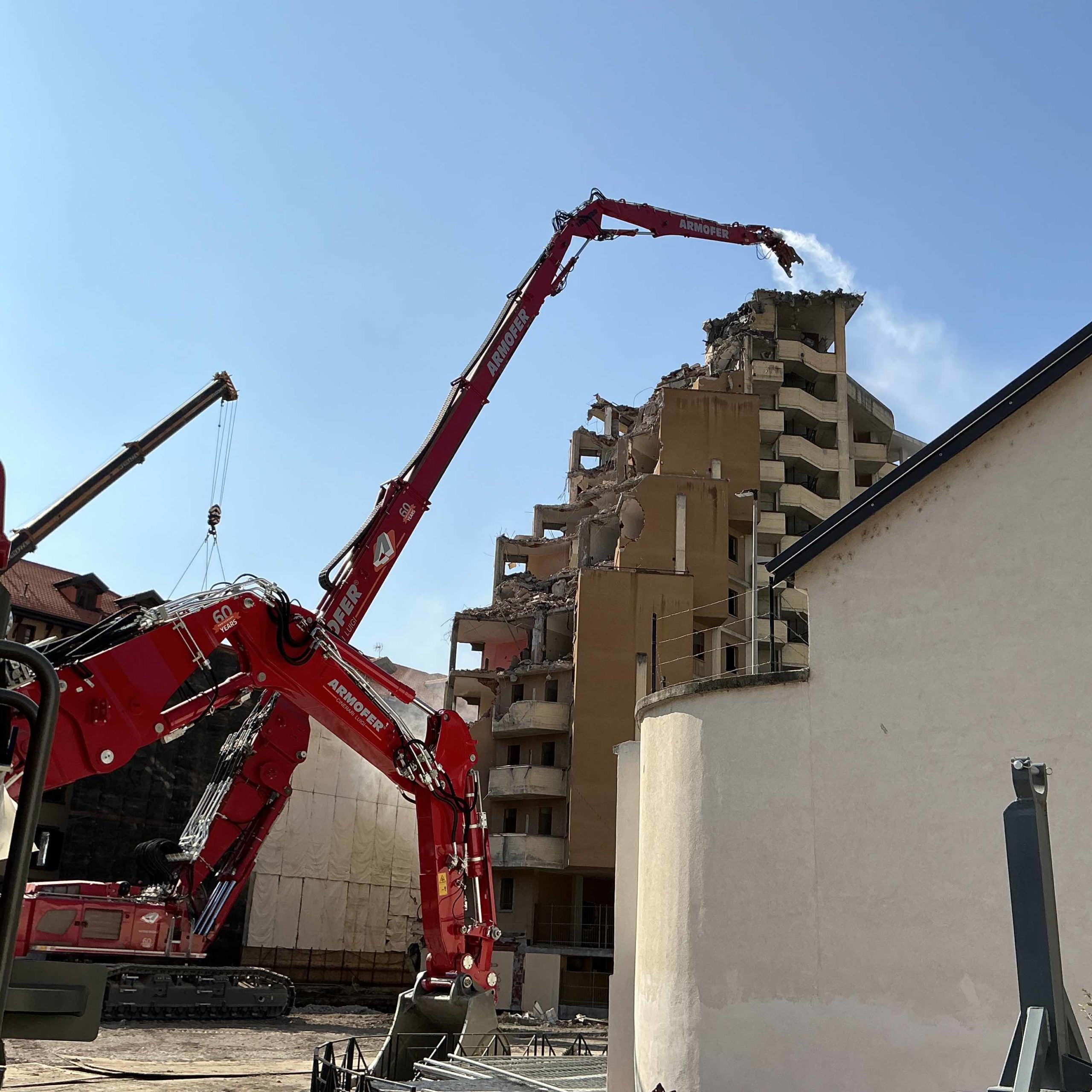
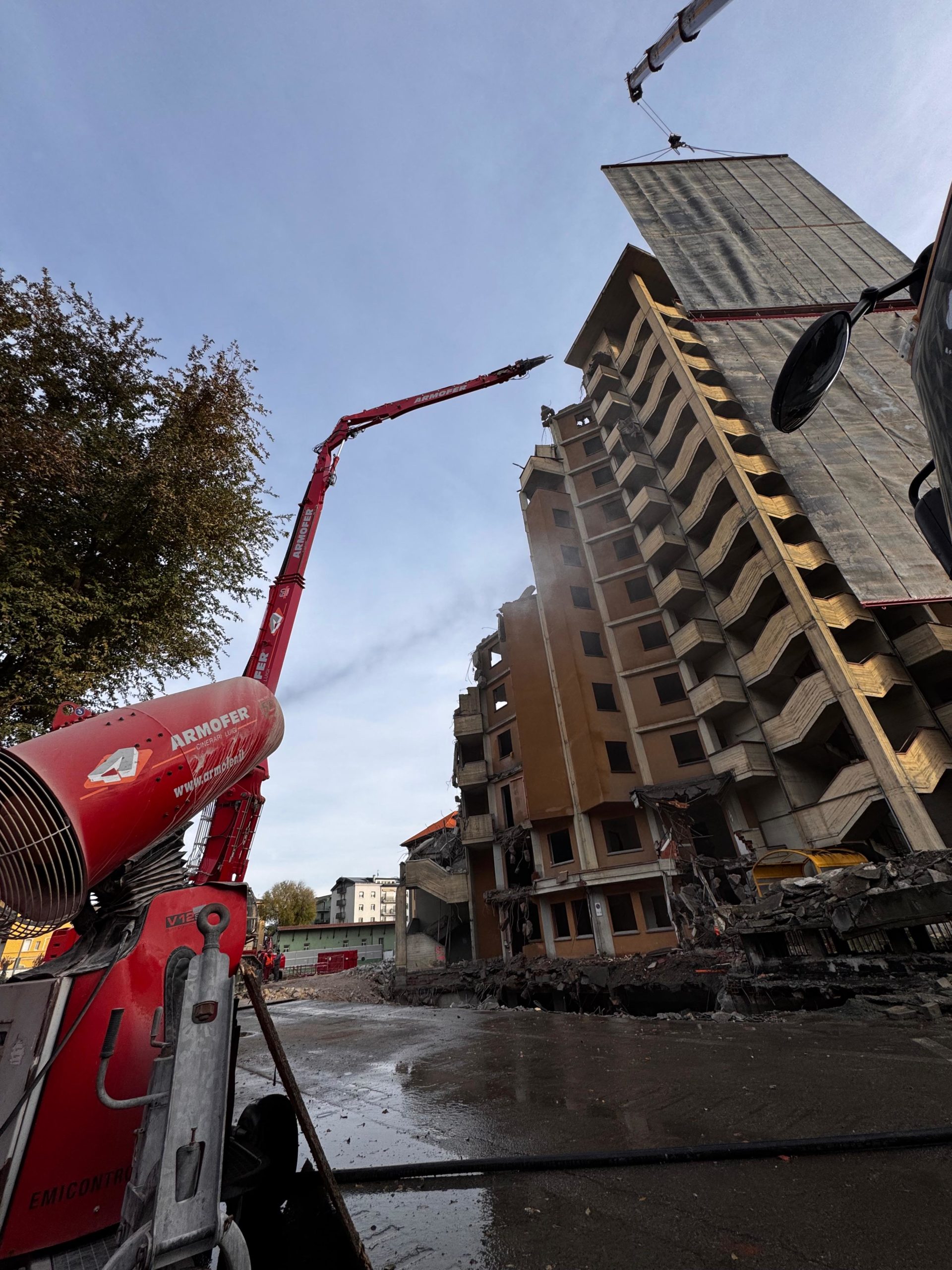
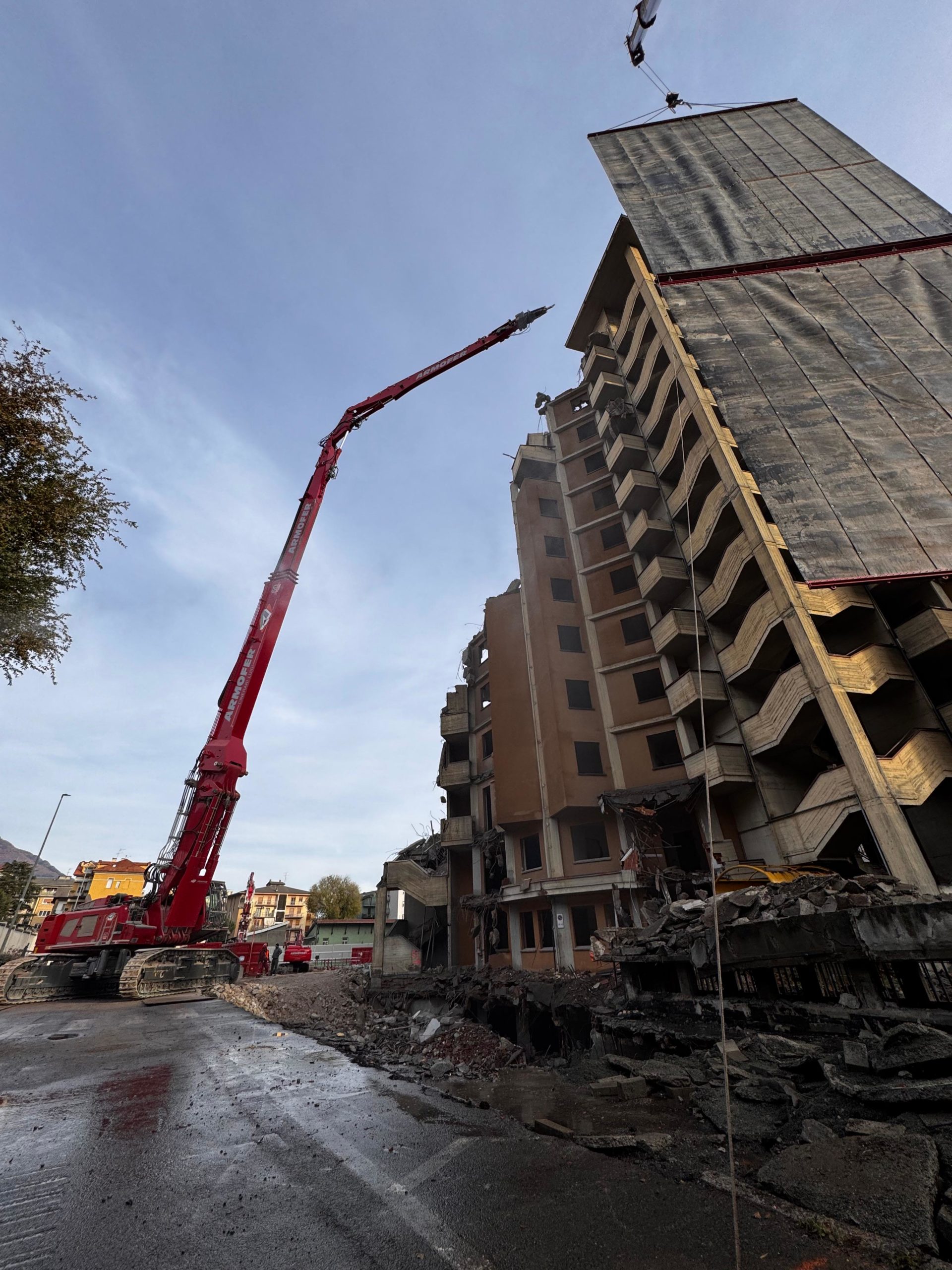
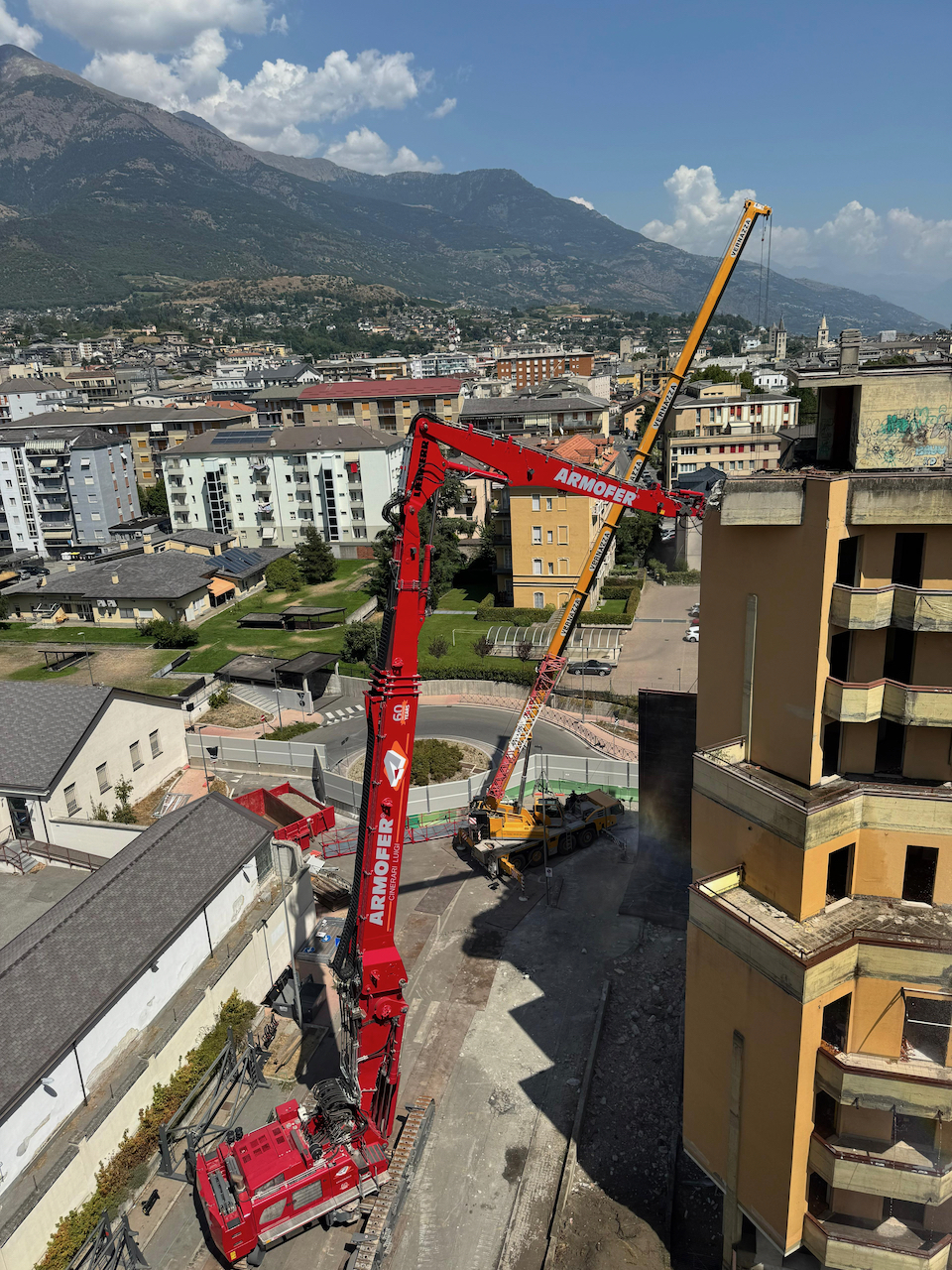
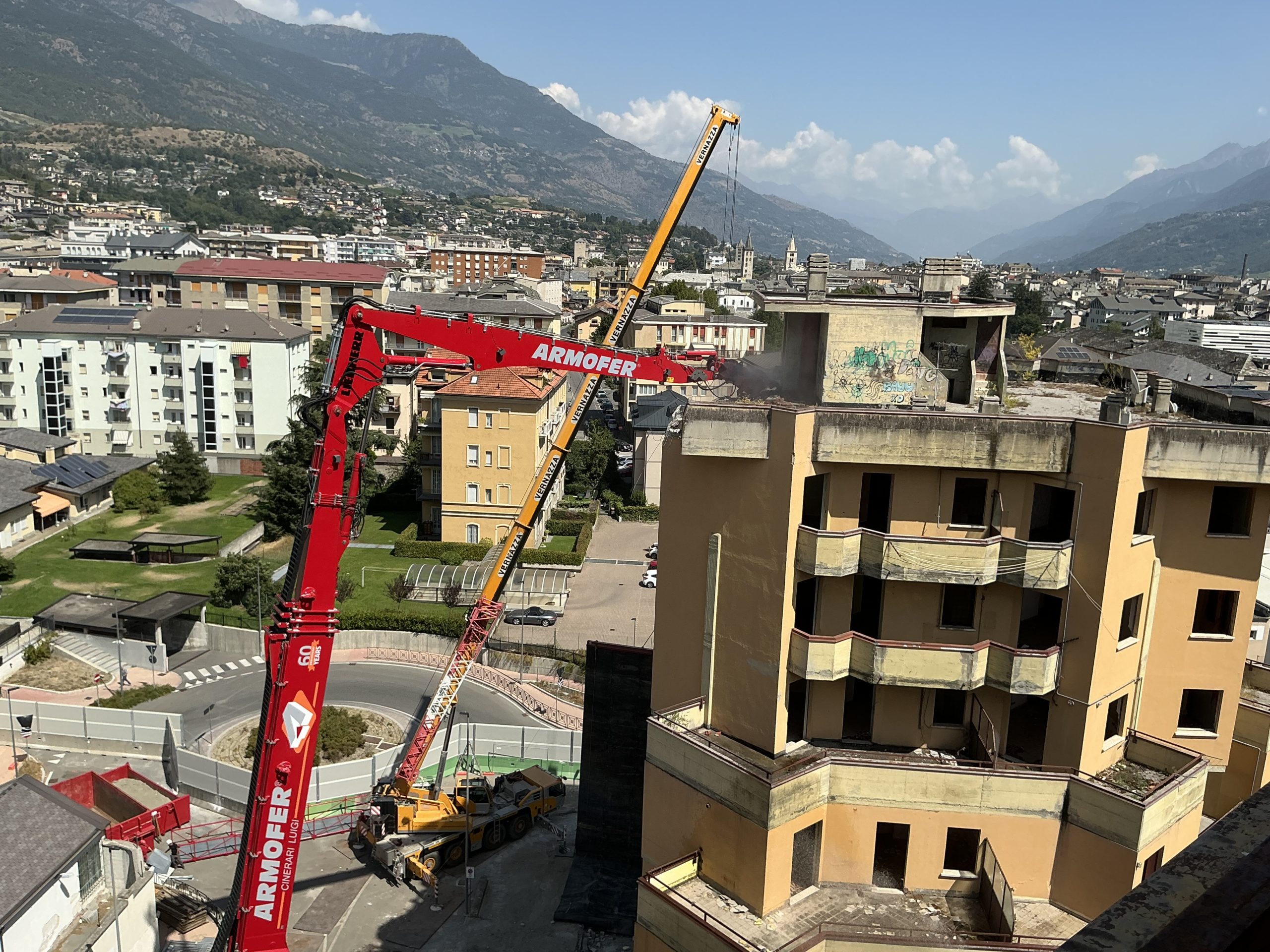
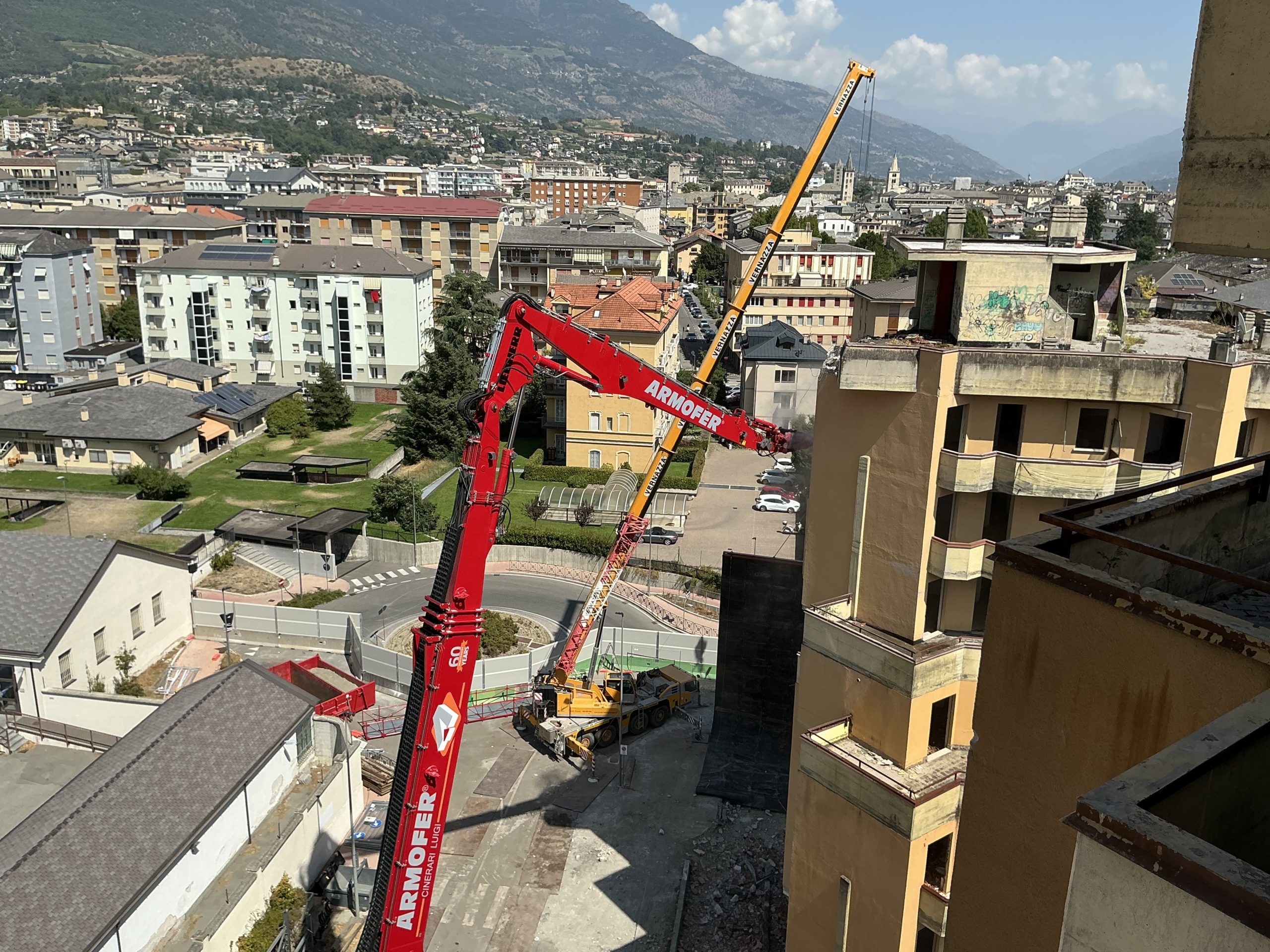
Behind a large anti-projection sheet supported by a crane truck, the pincer attacks the highest roof beam of the lower building, about 30 m high. The concrete crumbles with speed and precision in front of the public that has flocked to the event.
In the booth is Andrea Cinerari, one of the owners of the family business Armofer Cinerari luigi srl in Siziano (Pavia).
The demolition of the first of the two skyscrapers continued for about two weeks, leaving a pile of rubble on the ground, which is then crushed to reduce the volume and separate the iron from the rods that reinforced the concrete. The rubble will then be removed from the site and disposed of according to the law.
DEMOLITION TOP DOWN BUILDINGS
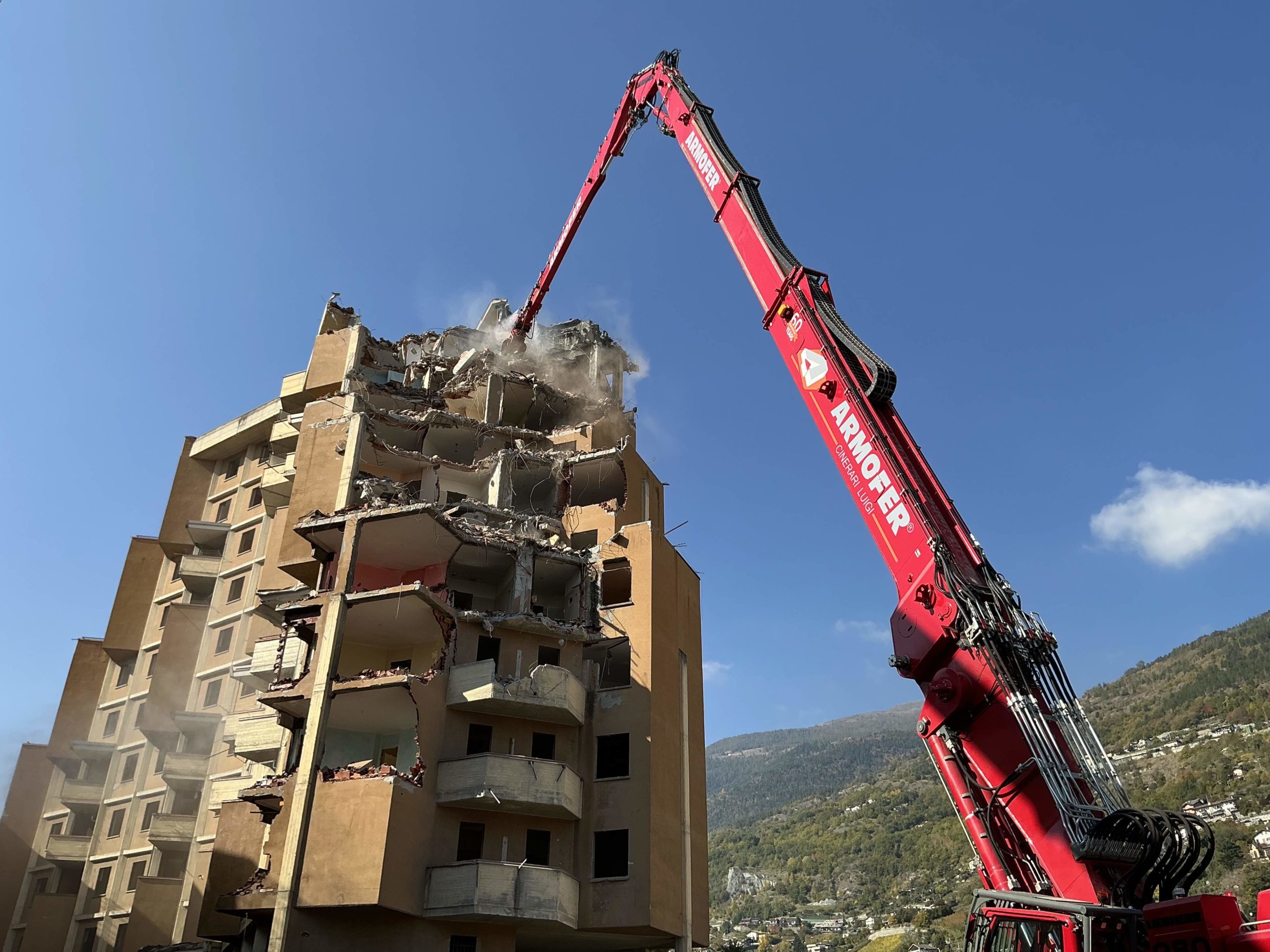
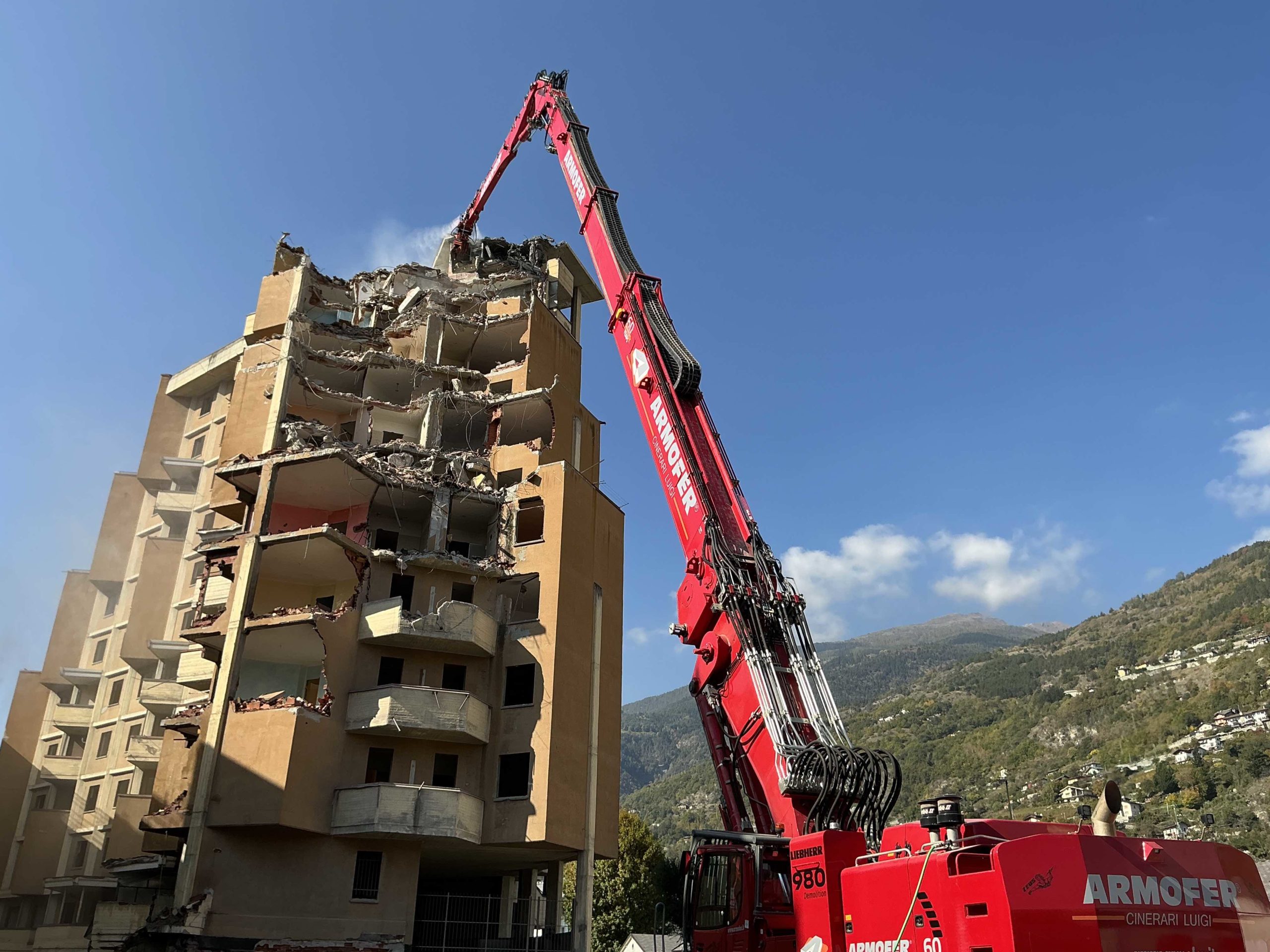
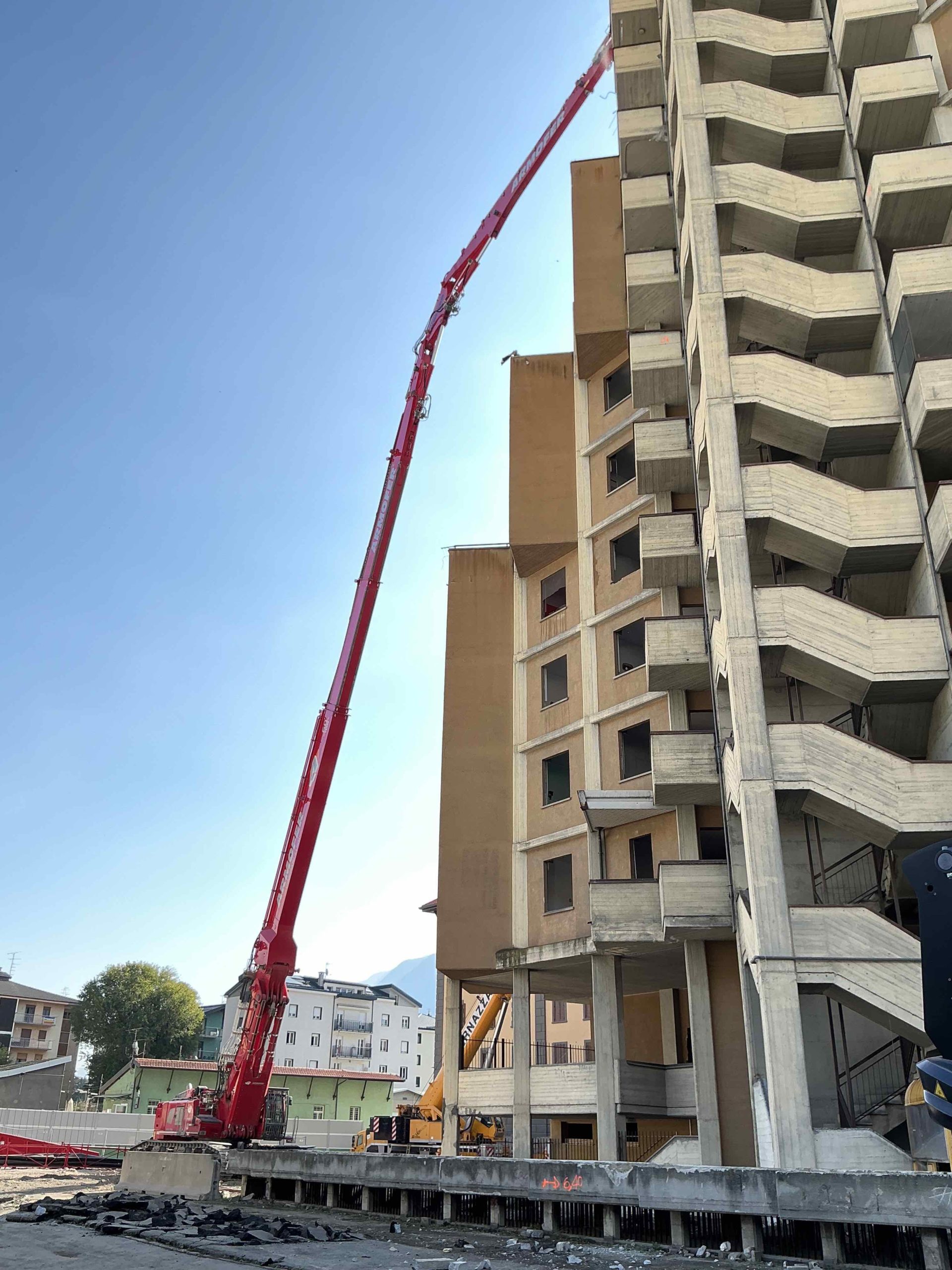
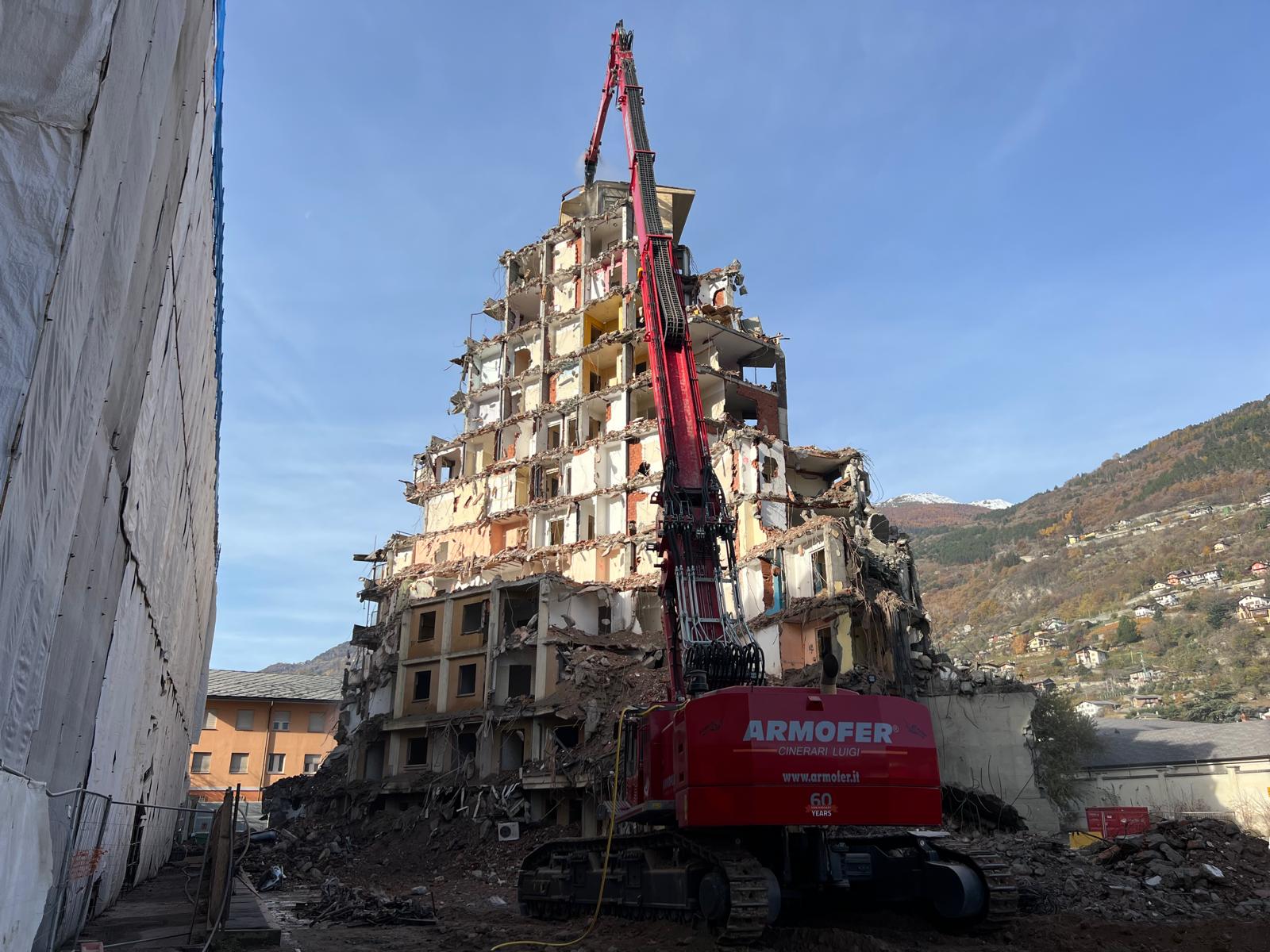
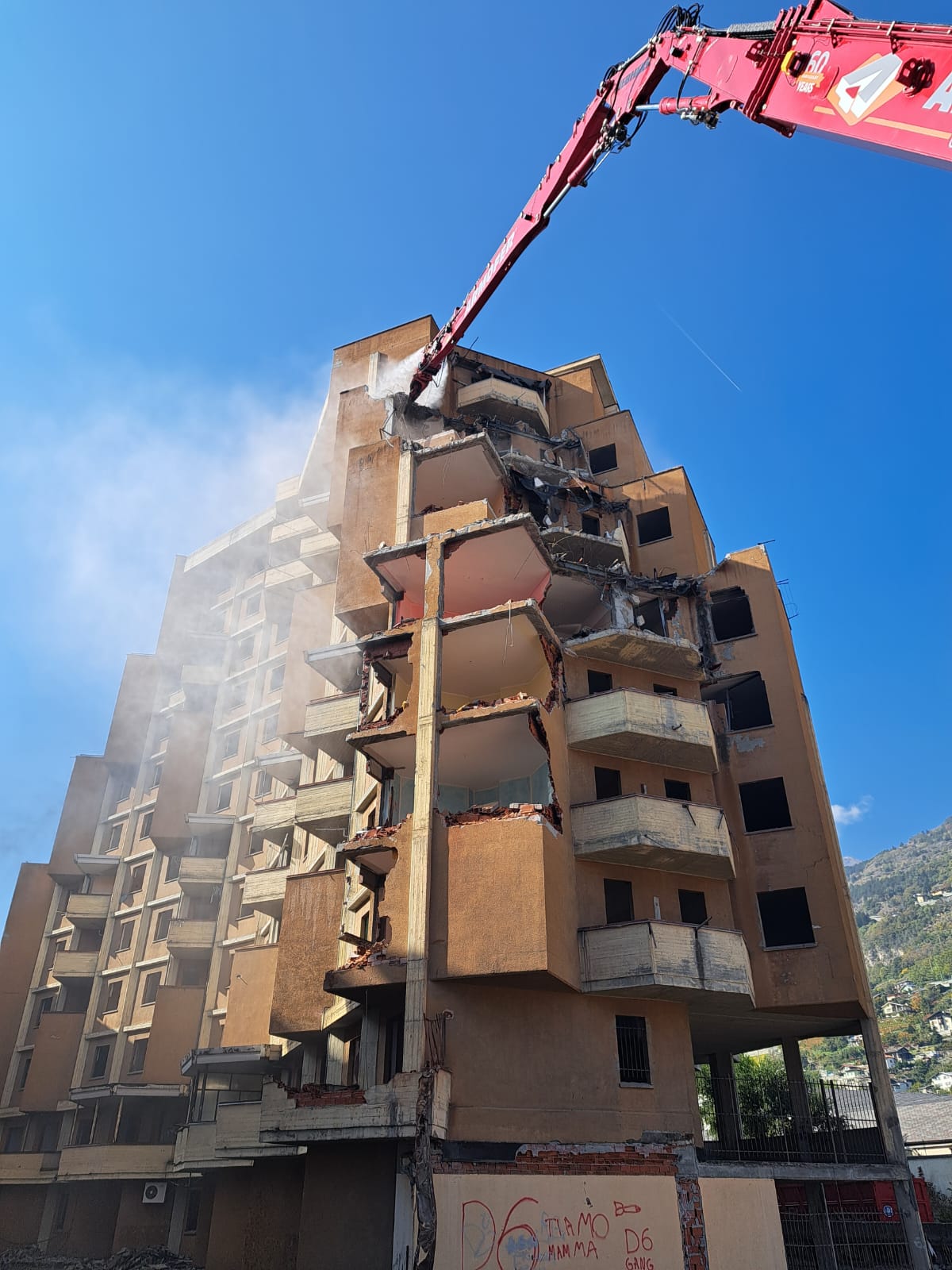
"From top to bottom', as the name implies, the demolition technique consists of removing modular portions of the structure, starting from the roof and gradually moving downwards, demolishing pillars and slabs in a sequence carefully planned in detail, taking care not to weigh down the underlying structures and at the same time never to statically compromise the underlying structure, even though portions of it are brought to a controlled collapse one at a time and under strict control of the technicians.
Demolition today rather consists of a progressive dismantling of structures, constantly checked in the field, taking care to limit vibrations, the projection of rubble and dust in the surroundings and noise as much as possible. The control of all environmental parameters is indeed of primary importance when intervening in cities, in urbanised centres, near active settled activities, even more so if residential.
Within a few weeks in August, the demolition of the first building was completed.
Next, on schedule, Armofer tackled the second building, the so-called Building A. The technique is the same, top-down, although the dimensions of the artefacts are larger and the height is also greater: 40 metres (12 storeys). In order to reach this height safely, the mighty Zeus excavator had to open the boom extensions, which allow the highest heights (up to 60 m) to be reached. In order to proceed with the correct distance from the demolition face and the correct extension of the boom, the area of the building that had already been demolished was filled with its rubble, so that the machine could stand and move properly. The demolition of Building A is scheduled to be completed by the end of the year.
At the end of the primary demolition, it will be time for the crushing and volume reduction of the rubble to homogeneous piles of MPS.
ENVIRONMENTAL MONITORING and MITIGATION WORKS
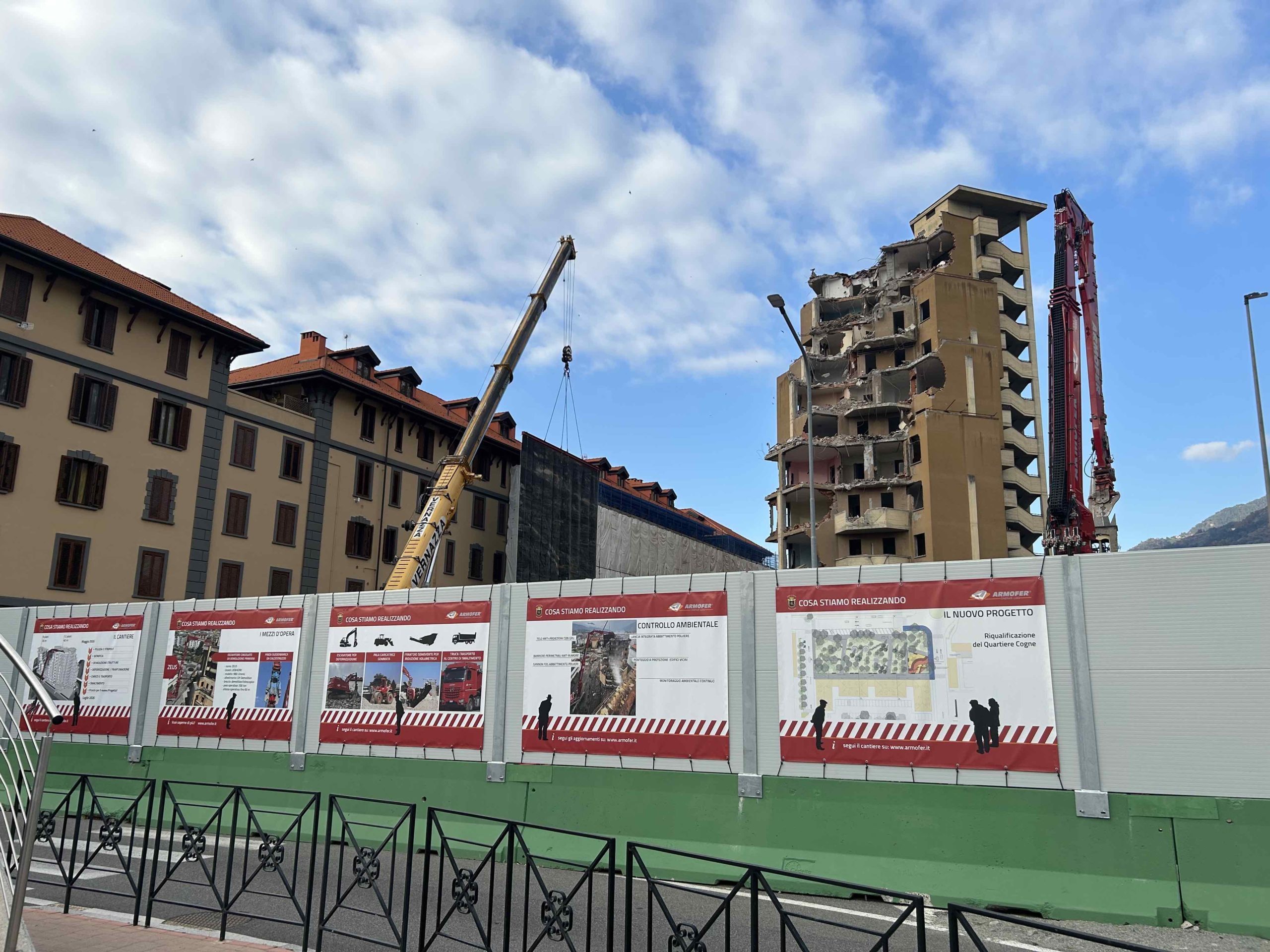
During the works, environmental monitoring and mitigation works are planned in coordination with ARPA. Since the tender phase, the municipality has set the project with great attention to the environment. Armofer was able to take up this challenge and offer its client solutions and technical improvements that would bring added value on this issue. These included: the logistics of access to the building site, high-performance soundproofing panels all around the building site and also for the scaffolding sheets protecting the small building adjacent to the two skyscrapers (existing minimum distance of only 6-7 m).
The mobile tarpaulin supported by the imposing crane is also now the standard for such operations.
Great attention was paid to air quality with a monitoring campaign of dust and airborne fibres organised continuously, in parallel and in collaboration with ARPA. The results so far confirm the goodness of the choices made and the safety of the operations.
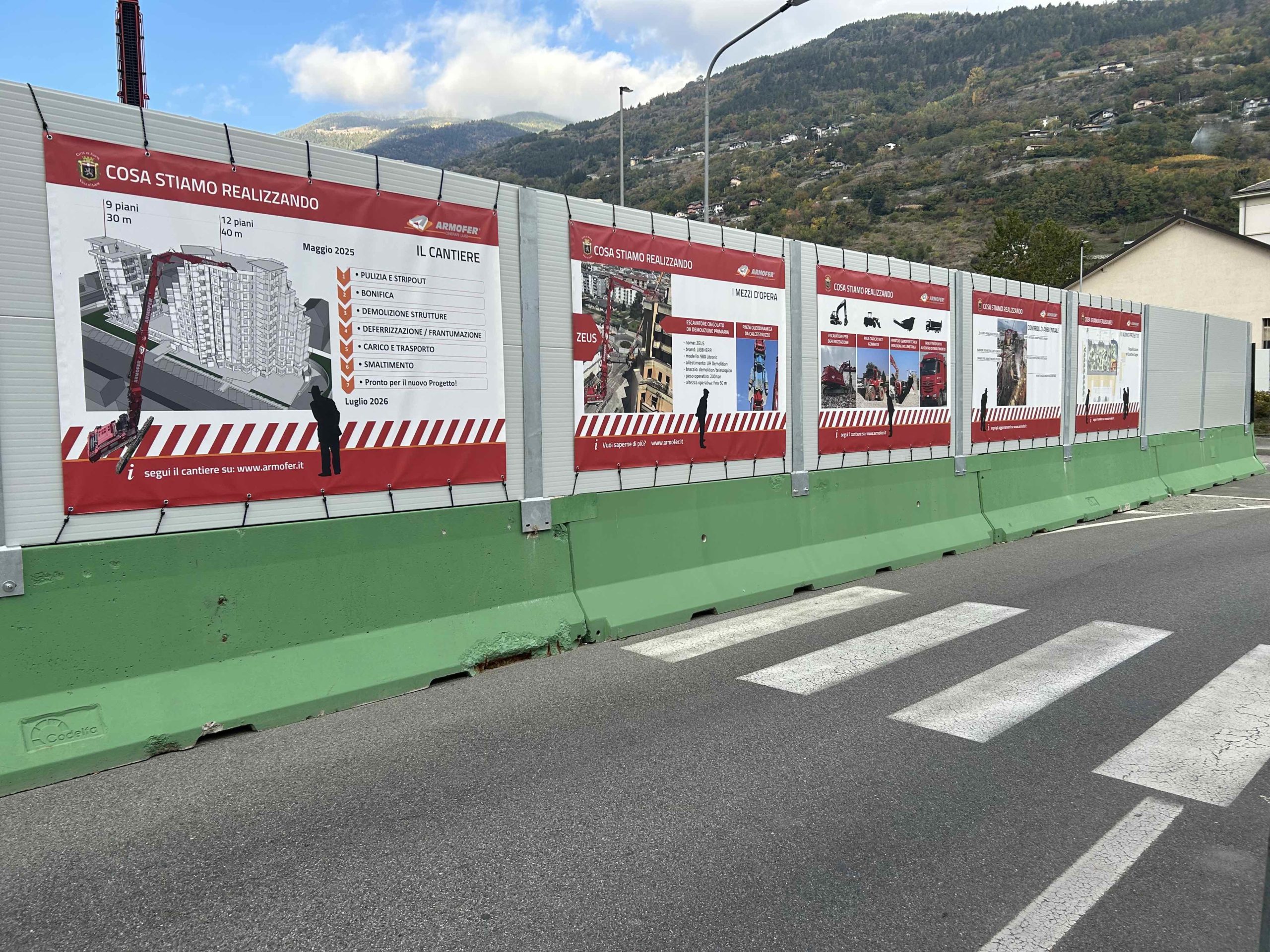
Finally, Armofer, again in collaboration with the Aosta municipality, still in the improvement and containment works of the site disturbance, has launched a communication campaign using the site's cesantas to 'tell' citizens and the curious what is happening on the site: dates and phases of the work; demolition techniques; machines and means of work present on the site; and of course a preview of the project that will soon take the place of the buildings: the public park with play area.
AOSTA
SITE JOURNAL
DEMOLITION TOP DOWN ED. A
DEMOLITION TOP DOWN BUILDING B
ED. B -First clamping
ZEUS 980 EXCAVATOR ASSEMBLY